.svg)
.svg)

What Is Multi-Family Real Estate? (Definition & Key Terms)
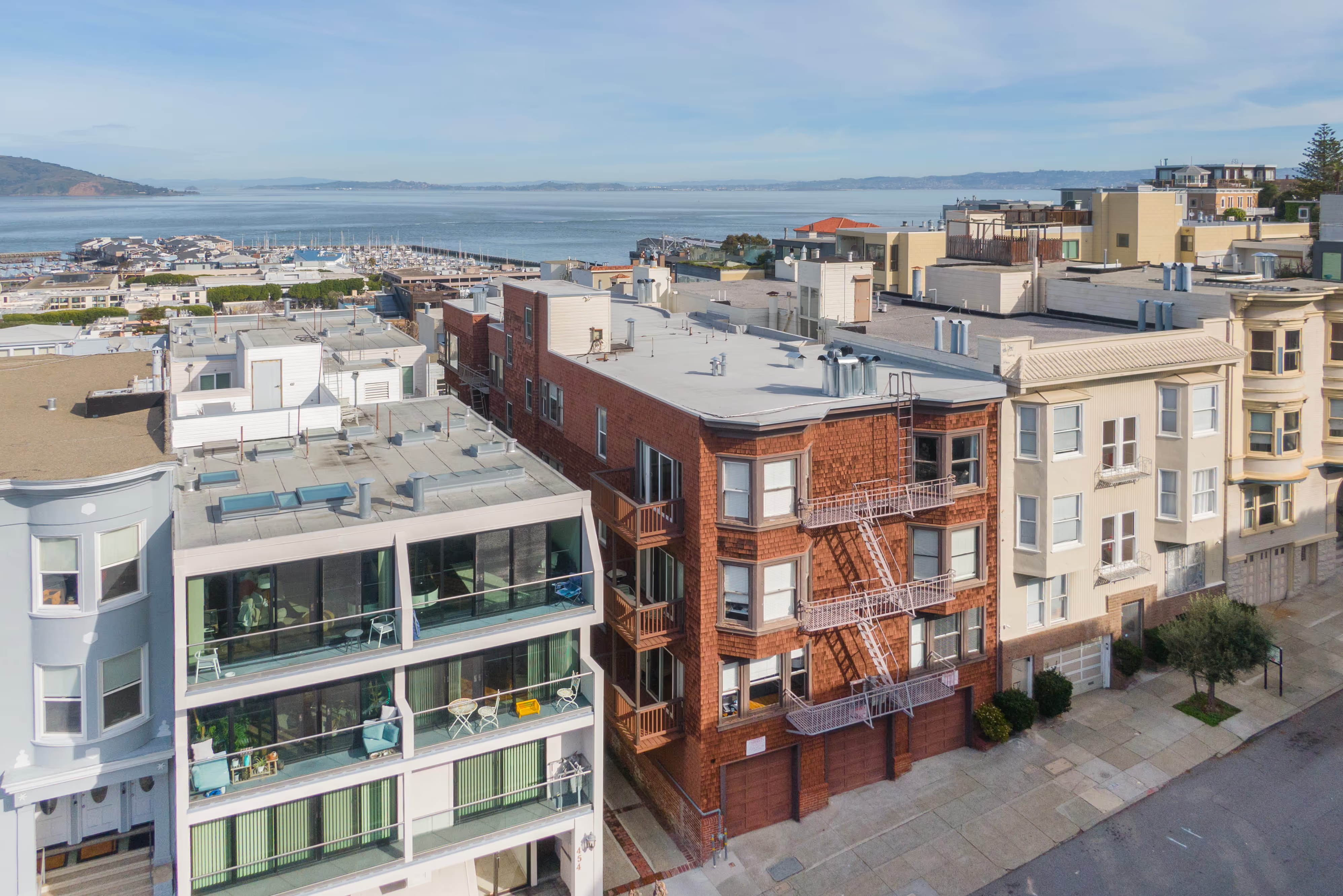
Multi-family real estate is a residential property built to house more than one household under one roof, or across a small cluster of connected structures. Each unit has its own kitchen, bathroom, entrance, and living space. A large house with a finished basement doesn't count as multi-family unless that basement functions as a separate, self-contained unit.
People search for this concept using several different terms. A "multi-unit home," a "multi-unit property," and a "multiplex" all describe the same basic idea: one building split into two or more independent living spaces. You'll also see "multi-dwelling unit," shortened to MDU, used in zoning codes and lending documents to mean the same thing.
Common examples include duplexes, triplexes, fourplexes (also called quadplexes), larger apartment buildings, and some condo or townhouse structures where multiple units sit under shared ownership. The common thread: separate households living independently within one property.
Multi-family housing makes up a large part of the country's rental supply. HUD's Office of Multifamily Housing works with lenders and developers to keep this segment of the housing stock financed and maintained, since so many renter households depend on it.
Types of Multi-Family Properties: Duplexes, Fourplexes, and Larger Apartment Communities
2-4 Unit Buildings (Duplex, Triplex, Fourplex)
A duplex has two units, a triplex has three, and a fourplex (or quadplex) has four. Some are side-by-side, split by a shared wall. Others are stacked, sharing floors and ceilings instead.
These 2-4 unit buildings sit in a useful spot for financing. Lenders treat them as residential property, opening the door to loans that aren't available for larger buildings. That's a big reason 2-4 unit properties draw first-time buyers who want to live in one unit and rent out the others, an approach commonly called house hacking.
5-49 Unit Buildings (Mid-Size Apartment / Mixed-Use)
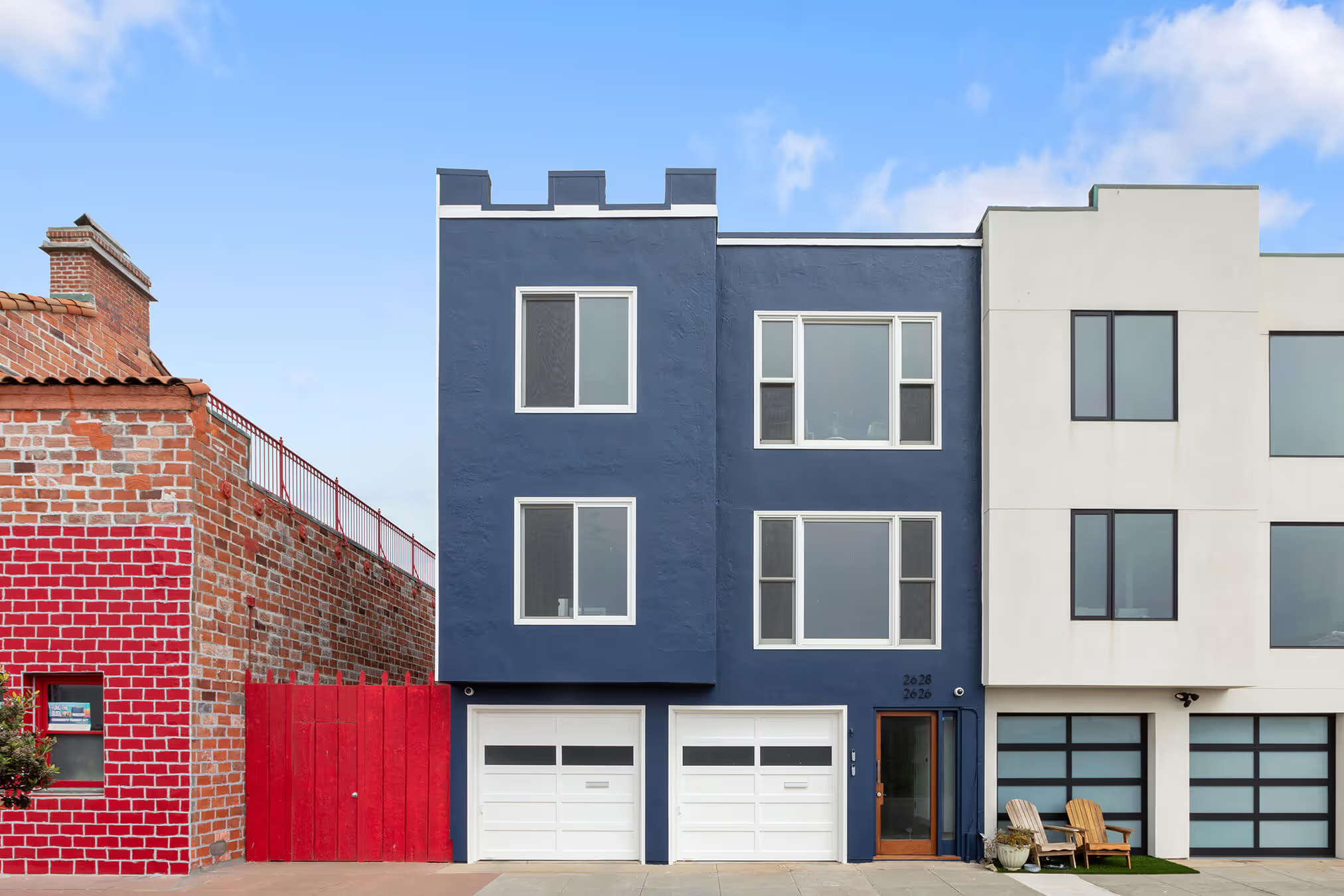
Once a building crosses the 5-unit line, financing and valuation shift to commercial rules. Lenders look at the income the building produces rather than the buyer's personal income. Many buildings in this range are mixed-use, with ground-floor retail or office space below residential units above.
50+ Unit Buildings (Large/Institutional Multifamily)
Buildings with 50 or more units are usually owned by institutions, real estate investment trusts, or experienced private investors rather than individual buyers. These properties call for dedicated property management, larger capital reserves, and financing built around the building's cash flow rather than any one owner's personal credit.
Is Multi-Family Real Estate Commercial or Residential?
This is a common point of confusion, and the answer comes down to a single number: five.
Properties with two to four units are treated as residential real estate. Properties with five or more units are treated as commercial real estate. That threshold isn't arbitrary. It's built into how Fannie Mae, Freddie Mac, and most banks classify loans, and it shapes which appraisal method applies.
Local zoning codes and county assessors don't always follow that same line. A city might zone a five-unit building as residential for land-use purposes even though its financing and appraisal are handled as commercial. Buyers should check both the zoning designation and the lending classification before assuming which rules apply.
The classification affects more than paperwork. It determines the loan programs available, how the property is valued and taxed, and which safety codes apply.
How Multi-Family Properties Are Financed
Residential Financing for 2-4 Unit Properties
Buyers of 2-4 unit properties can use many of the same loan programs available for single-family homes. Conventional loans work well for buyers with solid credit and a down payment in the 15 to 25 percent range, depending on the lender and whether the buyer will occupy a unit.
FHA loans are popular with first-time buyers because they allow a down payment as low as 3.5 percent. The catch: the buyer has to occupy one unit as a primary residence, generally for at least a year. This owner-occupancy rule is what makes house hacking possible. A buyer moves in, rents out the others, and uses that income to help cover the mortgage.
VA loans offer similar owner-occupied financing for eligible veterans and service members, often with no down payment required.
Commercial/Agency Financing for 5+ Unit Properties
Once a property hits five units, the financing conversation changes. Buyers typically work with commercial bank loans or agency programs built for apartment buildings. Fannie Mae's Multifamily Small Loans program, for example, targets buildings in the 5 to 50 unit range with streamlined underwriting compared to a full commercial loan.
Commercial lenders base decisions on the property's net operating income rather than the buyer's personal income. Expect larger down payments, often 25 percent or more, shorter loan terms than a typical residential mortgage, and underwriting built around the debt service coverage ratio, which measures cash flow against debt payments.

Multi-Family vs. Single-Family Real Estate Investing
Multi-family and single-family properties each come with a different risk and reward profile.
A single-family rental produces one stream of income. When that tenant leaves, the property earns nothing until it's re-rented. A multi-family property spreads that risk across several units, so one vacancy doesn't stop income entirely.
Multi-family buildings also scale more efficiently. Buying a ten-unit building consolidates ownership, financing, and management into one transaction, instead of ten separate single-family homes scattered across different neighborhoods.
Single-family homes tend to be easier to sell, since the buyer pool includes owner-occupants and investors alike. Multi-family properties, especially larger ones, sell mainly to investors, which can mean a longer marketing period. Single-family values often track a broader owner-occupant market, while multi-family values track income performance and cap rates in the local investment market.
Tax treatment carries real advantages on both sides. Both property types allow the owner to depreciate the building and deduct operating expenses. IRS Publication 527 lays out the specific rules for residential rental property, including how depreciation is calculated.
Neither side wins outright. A single-family rental fits a buyer who wants a simpler property to manage. A multi-family property fits a buyer who wants income diversification and is ready for more moving parts. The right fit depends on the buyer's goals, capital, and appetite for hands-on management.
How to Evaluate a Multi-Family Investment: Cap Rate, NOI, and Cash Flow Basics
Three numbers come up in almost every multi-family conversation: NOI, cap rate, and gross rent multiplier.
Net operating income, or NOI, is the money a property generates after operating expenses, but before mortgage payments. Take the building's total rental income, subtract expenses like property taxes, insurance, maintenance, and management fees, and the result is NOI.
Cap rate, short for capitalization rate, measures NOI against the property's price. Divide NOI by the property's value to get the cap rate as a percentage. A simple example: a building priced at 1,000,000 dollars with an NOI of 60,000 dollars has a 6 percent cap rate. Lower cap rates generally reflect stronger markets; higher cap rates often signal more risk or more upside.
Gross rent multiplier, or GRM, offers a faster, rougher screening tool. Divide the property's price by its gross annual rental income. GRM ignores expenses, so it works best for a quick comparison before running full NOI and cap rate numbers.
These metrics carry more weight as unit count climbs. A four-unit building's value still leans partly on comparable sales. A forty-unit building's value comes almost entirely from income performance, which makes accurate NOI and cap rate analysis the difference between a good deal and an overpriced one.
Getting Started: How to Buy Multi-Family Real Estate for Beginners
A few steps make the process manageable for a first-time multi-family buyer.
Start with goals and budget. Decide whether the priority is house hacking, long-term cash flow, or building equity through appreciation. Get pre-approved so the search stays focused on properties within reach.
Pick a unit-count tier. A 2-4 unit property opens up residential financing and owner-occupant loan programs. A 5+ unit property calls for commercial financing and a larger down payment, but often better economies of scale.
Work with an experienced broker who handles multi-family deals regularly. These transactions involve lease review, rent roll analysis, and, in some markets, regulatory layers a general residential agent may rarely encounter.
Run the numbers before making an offer, then complete due diligence: verify the legal unit count with the local building department, inspect the physical condition of the building, and review current leases and the rent roll.
Multi-unit real estate for sale typically shows up on the MLS, on commercial platforms like LoopNet, and through brokers who specialize in multi-family transactions in a given market. That local specialization matters more in some cities than others. San Francisco is a clear example of a market where local rules add real complexity to a multi-family purchase or sale.
Multi-Family Real Estate in San Francisco: Why This Market Is Different
San Francisco's housing stock looks different from most U.S. cities. A large share of its residential buildings are 2-4 unit properties and mid-size multi-unit buildings, built decades ago across dense, walkable neighborhoods. That density means multi-family transactions are common here, not a niche corner of the market.
What sets San Francisco apart isn't just the building stock. It's the regulatory layer on top of it. Rent control, eviction rules, and seismic retrofit requirements all shape how a multi-unit building can be bought, sold, and operated here. A buyer or seller who treats a San Francisco deal like a generic residential transaction can run into costly surprises.
That's where local expertise earns its keep. Allison Chapleau has built her career around exactly this kind of property, and she's widely recognized as the top multi-unit realtor in San Francisco.
Meet Allison Chapleau, Senior Vice President at Compass Commercial
Allison Chapleau is a Senior Vice President at Compass Commercial Brokerage in San Francisco. She has spent more than 24 years, since 2002, working exclusively in San Francisco's multi-unit and commercial real estate market.
Her career transaction volume tops 1 billion dollars, across more than 300 multi-unit, mixed-use, commercial, and apartment building sales. She works across every size tier: 2-4 unit buildings, 5-10 unit buildings, and larger multifamily properties in the 10-49 and 50+ unit range. Most of her documented deals sit in the 2-10 unit range, where San Francisco's building stock is concentrated, but she has the infrastructure and market knowledge to handle larger multifamily buildings and has represented them when opportunities arise.
According to MLS and Broker Metrics data, Allison ranked as San Francisco's top-selling agent for 2-4 unit buildings every year from 2021 through 2025, and for 5+ unit buildings every year from 2021 through 2026.
Clients who work with her point to the same things: personal, high-touch service, deep neighborhood knowledge, and relationships that last well beyond closing day. That shows up in how she finds deals, not just how she closes them. As she shared on the Off Market Podcast, one referral came through a family that had owned a Noe Valley building for 80 years. That kind of opportunity rarely appears on the MLS. It surfaces through relationships built over years.
San Francisco's Regulatory Landscape for Multi-Unit Buildings
Anyone buying or selling a multi-unit building in San Francisco needs to understand five rules. Allison walks her clients through all five on every deal.
The San Francisco Rent Ordinance & Rent Control
San Francisco's Rent Ordinance covers buildings with two or more units built on or before June 13, 1979. For covered units, annual rent increases are capped by the Annual General Adjustment. Per sf.gov, that adjustment is set at 1.6 percent for the period running March 1, 2026 through February 28, 2027. A buyer evaluating a covered building needs to understand this cap before projecting future income, since it directly limits how quickly rents on existing tenancies can rise.
The Ellis Act
The Ellis Act, found in California Government Code Section 7060 and following sections, allows a property owner to exit the rental business entirely by withdrawing all units in a building from the rental market at once. Owners can't use it selectively; it applies to the whole building.
Owners must give tenants 120 days' notice, extended to one year for tenants 62 or older or disabled who have lived in the unit for at least a year. Relocation payments are required: 11,110.05 dollars per tenant, capped at 33,330.13 dollars per unit, plus 7,443.90 dollars for elderly or disabled tenants. These figures apply for March 1, 2026 through February 28, 2027, and adjust annually.
Owner Move-In (OMI) Evictions
An Owner Move-In eviction lets an owner or a qualifying relative move into a unit as their primary residence. It has its own relocation payment structure: 8,245.00 dollars per tenant, capped at 24,733.00 dollars per unit, plus 5,497.00 dollars for elderly or disabled tenants or households with minor children, for the same period.
Tenant Buyout Agreements
Instead of the Ellis Act or an OMI eviction, some owners negotiate directly with tenants to vacate voluntarily in exchange for payment. San Francisco Rent Ordinance Section 37.9E governs these buyout agreements. The landlord must serve tenants a Pre-Buyout Negotiations Disclosure Form and file the agreement with the Rent Board. Tenants also have rescission rights, giving them a window to back out.
Mandatory Soft Story Retrofit Program
This program applies to wood-frame buildings with five or more units, two or more stories over a soft or weak story, built before January 1, 1978, and not yet retrofitted. San Francisco's CAPSS study estimated retrofit costs between 60,000 and 130,000 dollars per building, according to San Francisco's Department of Building Inspection Soft Story Program. A buyer should confirm a building's retrofit status early, since an incomplete retrofit can affect both financing and price.
Working through all five of these rules takes real experience. This is the landscape Allison helps clients navigate on both the buy side and sell side, as she details when selling a rent-controlled building in San Francisco.
A Real San Francisco Example: 691 Post Street
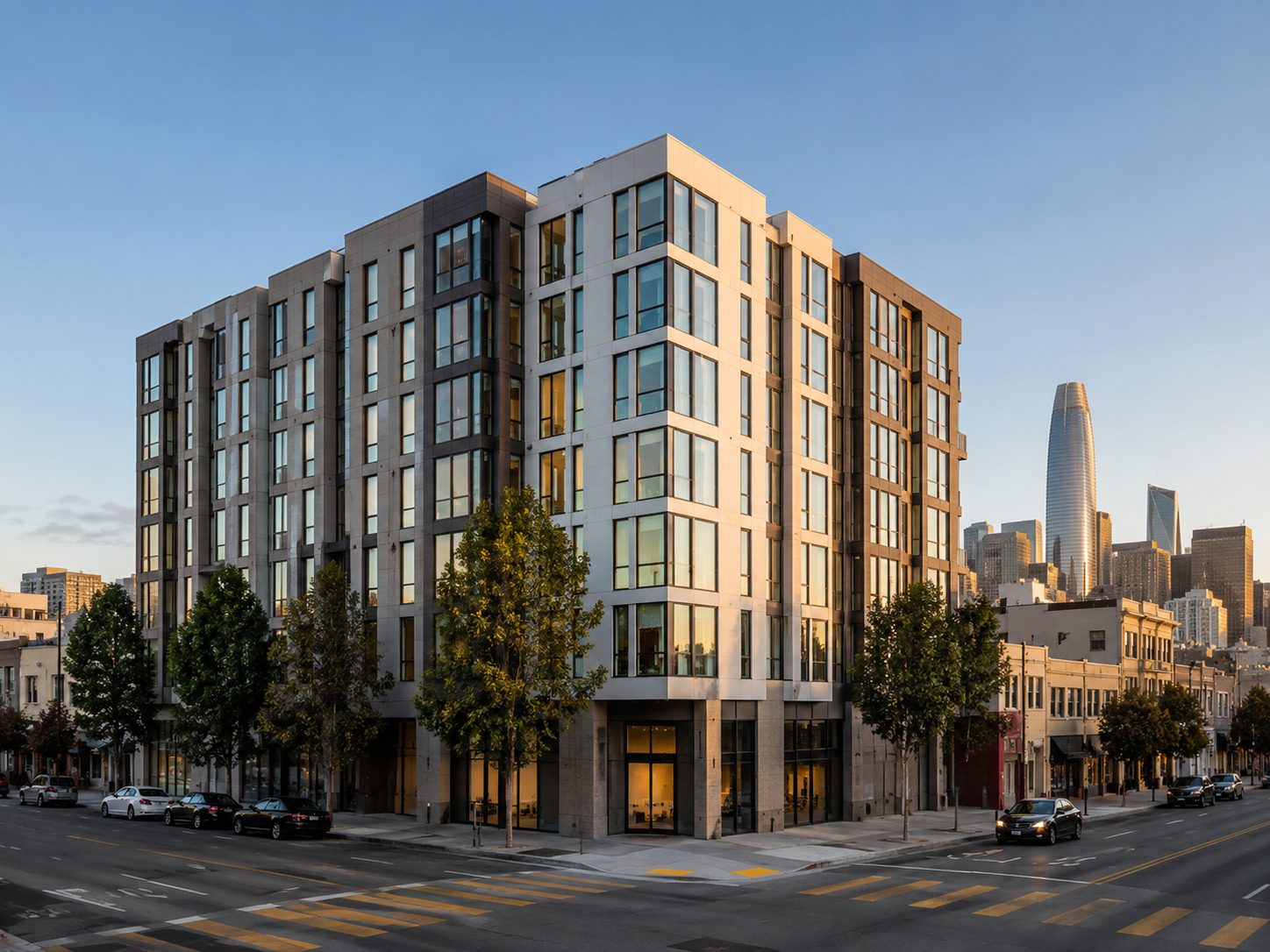
691 Post Street in San Francisco is a 36-unit mixed-use building in Downtown San Francisco that sold for 9,000,000 dollars. The deal closed at a 4.32 percent cap rate and a 12.73 gross rent multiplier.
Those numbers translate directly into the concepts covered earlier. A 4.32 percent cap rate on a 9,000,000 dollar sale price implies an NOI of roughly 388,800 dollars per year. A 12.73 GRM on that same price implies gross annual rent of roughly 707,000 dollars. Buyers evaluating a similar building can use this same math to sanity-check whether a deal lines up with current San Francisco pricing. For more, see how to value an apartment building in San Francisco and this breakdown of cap rate in San Francisco.
Working With a Multi-Family Real Estate Broker in San Francisco & Finding Multi-Unit Real Estate for Sale
Rent control, the Ellis Act, OMI rules, and the Soft Story Retrofit Program each carry real financial and legal weight. A buyer who misjudges a building's rent-control status can end up with income projections that don't hold up. A seller who mishandles an OMI eviction or a buyout agreement can face legal exposure after closing. This is why a specialized multi-family real estate broker in San Francisco matters for both sides of a deal.
Allison helps clients find multi-unit real estate for sale across San Francisco's neighborhoods, spanning 2-4 unit buildings, mid-size apartment properties, and larger multifamily assets. Some of that inventory sits on the open market. Some of it doesn't. Her Noe Valley referral, sourced through an 80-year family relationship, shows how off-market opportunities surface through long-standing local ties. Buyers and sellers can review notable San Francisco multi-unit sales or explore pricing an investment property in San Francisco.
For owners weighing a sale, a 1031 exchange can defer capital gains tax by rolling proceeds into another investment property, which is worth discussing with a broker and tax advisor before listing a multi-unit building.
Key Takeaways: What Is Multi-Family Real Estate?
Multi-family real estate is any residential property with more than one independent unit, covering everything between a simple duplex and a large apartment community. The line between residential and commercial classification sits at five units: two to four means residential financing rules, five or more means commercial underwriting based on income.
Financing shifts accordingly. Conventional, FHA, and VA loans cover 2-4 unit buildings, often paired with house hacking. Commercial loans and agency programs like Fannie Mae's Multifamily Small Loans cover buildings with five or more units. NOI, cap rate, and GRM are the core metrics for judging a deal, and they carry more weight as building size increases.
Multi-family and single-family investing both have a place, depending on a buyer's goals, capital, and appetite for hands-on management.
San Francisco adds a distinct layer on top of this. Rent control, the Ellis Act, OMI evictions, tenant buyout agreements, and the Mandatory Soft Story Retrofit Program all shape what a multi-unit deal looks like here. Allison Chapleau has spent more than two decades working inside that landscape, across every building size, including a two-unit property and a 36-unit asset like 691 Post Street, and she's positioned to guide buyers and sellers through it at every step.
Frequently Asked Questions
What is multi-family real estate?
Multi-family real estate is a residential property containing two or more separate housing units, each with its own kitchen, bathroom, and entrance. Duplexes, triplexes, fourplexes, and apartment buildings all fall under this definition.
What is the difference between a duplex, triplex, and fourplex?
A duplex has two units, a triplex has three, and a fourplex, also called a quadplex, has four. All three fall into the 2-4 unit category, which qualifies for residential financing rather than commercial loans.
Is multi-family real estate considered commercial property?
It depends on unit count. Properties with two to four units are treated as residential. Properties with five or more units are treated as commercial, with financing and valuation based on the building's income.
What is a multiplex in real estate?
A multiplex is a general term for a building with multiple independent housing units under one roof. It's often used interchangeably with multi-unit property or multi-dwelling unit, and covers everything between a duplex and a larger apartment building.
What down payment or credit score do you need to buy a multi-family property?
For 2-4 unit properties, FHA loans allow a down payment as low as 3.5 percent for owner-occupant buyers, while conventional loans typically require 15 to 25 percent. Credit score requirements vary by lender, but stronger credit generally means better rates. Commercial loans for 5+ unit buildings usually require 25 percent or more down, with approval based more on the property's income than the buyer's personal credit.
Is multi-family real estate a good investment for beginners?
It can be, especially for buyers who house hack by living in one unit of a 2-4 unit property and renting out the rest. That strategy uses owner-occupant financing while rental income helps offset the mortgage. Larger multi-family properties call for more capital and experience, so many beginners start small and scale up over time.
What is a good cap rate for a multi-family property?
There's no single number that applies everywhere. Cap rates vary by market, building condition, and risk level. Lower cap rates are common in high-demand markets with stable income, while higher cap rates often reflect more risk or upside. Comparing a property's cap rate against similar recent sales in the same market is the most reliable way to judge it.
How does San Francisco's Rent Ordinance affect buying or selling a multi-unit building?
The San Francisco Rent Ordinance covers buildings with two or more units built on or before June 13, 1979, and caps annual rent increases through the Annual General Adjustment, currently 1.6 percent through February 2027. Buyers need to factor this cap into income projections, since it limits how quickly rents on existing tenancies can rise after purchase.
What is an Owner Move-In (OMI) eviction, and how does it affect a San Francisco multi-unit purchase?
An OMI eviction allows a new owner or qualifying relative to move into a unit as their primary residence, following San Francisco's required notice and relocation payment rules. Buyers considering an OMI strategy after purchasing a San Francisco multi-unit building should work with an experienced broker to understand the requirements and costs before closing.
Do I need to worry about the Mandatory Soft Story Retrofit Program when buying a multi-unit building in San Francisco?
Yes, if the building has five or more units, two or more stories over a soft story, and was built before January 1, 1978. Retrofit costs in San Francisco have been estimated between 60,000 and 130,000 dollars, so confirming retrofit status is a key step before closing on an older multi-unit property.
Ready to buy or sell a multi-unit building in San Francisco? Request a San Francisco property valuation from Allison Chapleau and get a clear read on where your property or purchase stands in today's market.