.svg)
.svg)


If a property is part of an estate moving through probate, selling it works differently than a typical home sale. There may be an executor or administrator making decisions on the estate's behalf, a probate court with its own set of requirements, multiple heirs or beneficiaries with a stake in the outcome, attorneys involved to protect the estate, a formal court-ordered appraisal, and in some cases a public confirmation hearing before the sale can close.
This guide walks through the real estate side of that process in California: how someone gets legal authority to sell, what the probate court requires along the way, how pricing and marketing work under those rules, and what happens to the proceeds once escrow closes and the estate is ready to distribute funds.
Legal questions specific to any individual estate should be confirmed with the estate's attorney. This article covers how a probate property sale generally works in California. It is general information, not legal advice, and neither Allison Chapleau nor this website is a law firm.
Many readers arrive here already knowing their situation involves probate. If you're not sure whether a property needs to go through probate at all, start with our companion guide, What Happens to a House When the Owner Dies?, before continuing.
What is a probate property, and what is a probate sale?
A probate property is real estate that's part of a deceased person's estate and subject to court oversight because it's passing through formal probate administration, rather than transferring automatically through a trust or joint tenancy. If a home was held in a living trust or owned jointly with right of survivorship, it typically bypasses probate entirely and this page won't apply to it.
A probate sale is the actual transaction of selling that property while the estate is open. Depending on the personal representative's level of authority, that sale may or may not need to go before a judge for confirmation, which we cover in question 6. This page assumes the property in question has already been confirmed to be in probate. If you're still working that out, start with What Happens to a House When the Owner Dies? first.
How does selling a probate property work in California, step by step?
Selling a probate property follows a defined sequence set out in the California Probate Code and administered locally (in San Francisco, through Department 204 of the Superior Court). At a high level, it looks like this:
- The personal representative is appointed by the court and receives Letters Testamentary or Letters of Administration, the document that proves their authority to act for the estate.
- The property is inventoried and formally appraised by a probate referee as part of the estate's required inventory.
- The personal representative, often working with a real estate agent, sets a price and lists the property.
- An offer is accepted, subject to whatever authority level the court granted the representative.
- If the representative has limited authority, the accepted sale goes to a court confirmation hearing, where other buyers can submit competing overbids in open court.
- Escrow closes, and the sale proceeds return to the estate for payment of debts and eventual distribution to heirs or beneficiaries.
Each of these steps has its own timeline and paperwork, which the following questions break down in more detail. The pace of the sale often depends less on the real estate market and more on how quickly the court calendar moves, which is why the estate's attorney and the listing agent generally need to stay in close contact from appointment through closing.
Can a house be sold during probate, or does probate have to finish first?
Yes. Selling real property is one of the most common actions taken during an open probate case, not something that waits until the case closes. In many estates, the case can't close until the real estate sells and the proceeds are accounted for to the court.
"During probate" means after the personal representative has received Letters and holds legal authority to act, which typically happens a few months into the case. It does not mean at the very start, before anyone has been formally appointed.
How long does it take to sell a probate property in California?
Timelines vary, but a few benchmarks are consistent across most California counties. Appointment of the personal representative usually takes about 6 to 8 weeks after the initial filing. Once Letters are issued, listing the property and getting to an accepted offer can move at normal market speed. If the sale requires court confirmation, expect to add roughly 30 to 45 days for the hearing to be scheduled and held.
The property sale is typically one piece of a larger probate timeline that runs 9 to 18 months overall, longer for contested or complex estates. California also imposes a mandatory four-month creditor claim period once Letters are first issued. Because of that claim window, most estates can't fully close in under about 8 months, even when the real estate sale itself moves quickly. Court scheduling varies by county caseload, so the estate's attorney is the best source for a current, case-specific timeline.
Who is allowed to sell a probate property, what is the executor's role?
Only the court-appointed personal representative has legal authority to sell estate real property. That representative is called the executor if named in a valid will, or the administrator if there's no will. "Personal representative" is the umbrella term covering both roles, and it's the term used throughout the Probate Code.
Heirs cannot sell the property individually, and a family member acting informally on the estate's behalf has no legal standing to do so. Until Letters are issued by the court, no one, including the person eventually named representative, can bind the estate to a sale. If the court appoints co-representatives, they generally must act together on a sale unless the court's order specifically says otherwise.
What authority does an executor have to sell real estate, and does the court have to approve it?
This is the piece of the process that determines how the rest of the sale unfolds, so it's worth understanding well. California's Independent Administration of Estates Act (IAEA) gives personal representatives one of two authority levels, and the court sets which one applies at the time of appointment.
With full authority under the Independent Administration of Estates Act, the personal representative can sell estate real property based on their own judgment, without a court confirmation hearing. They're still required to send beneficiaries a Notice of Proposed Action before the sale closes, giving them a window to object, but if no one objects, the sale proceeds without a judge signing off on the price.
With limited authority, the sale has to go back to court. The accepted offer is presented to a judge at a confirmation hearing, a probate referee must have appraised the property within the prior year, and other buyers are allowed to submit overbids in open court. The first overbid must exceed the accepted price by 10 percent of the first $10,000 plus 5 percent of the remaining amount, a formula set out in state probate law.
Which authority level applies to a given estate is decided by the court when the representative is appointed. It's stated on the Letters document itself, and the estate's attorney can confirm it if there's any question.
What documents are needed to sell a probate property?
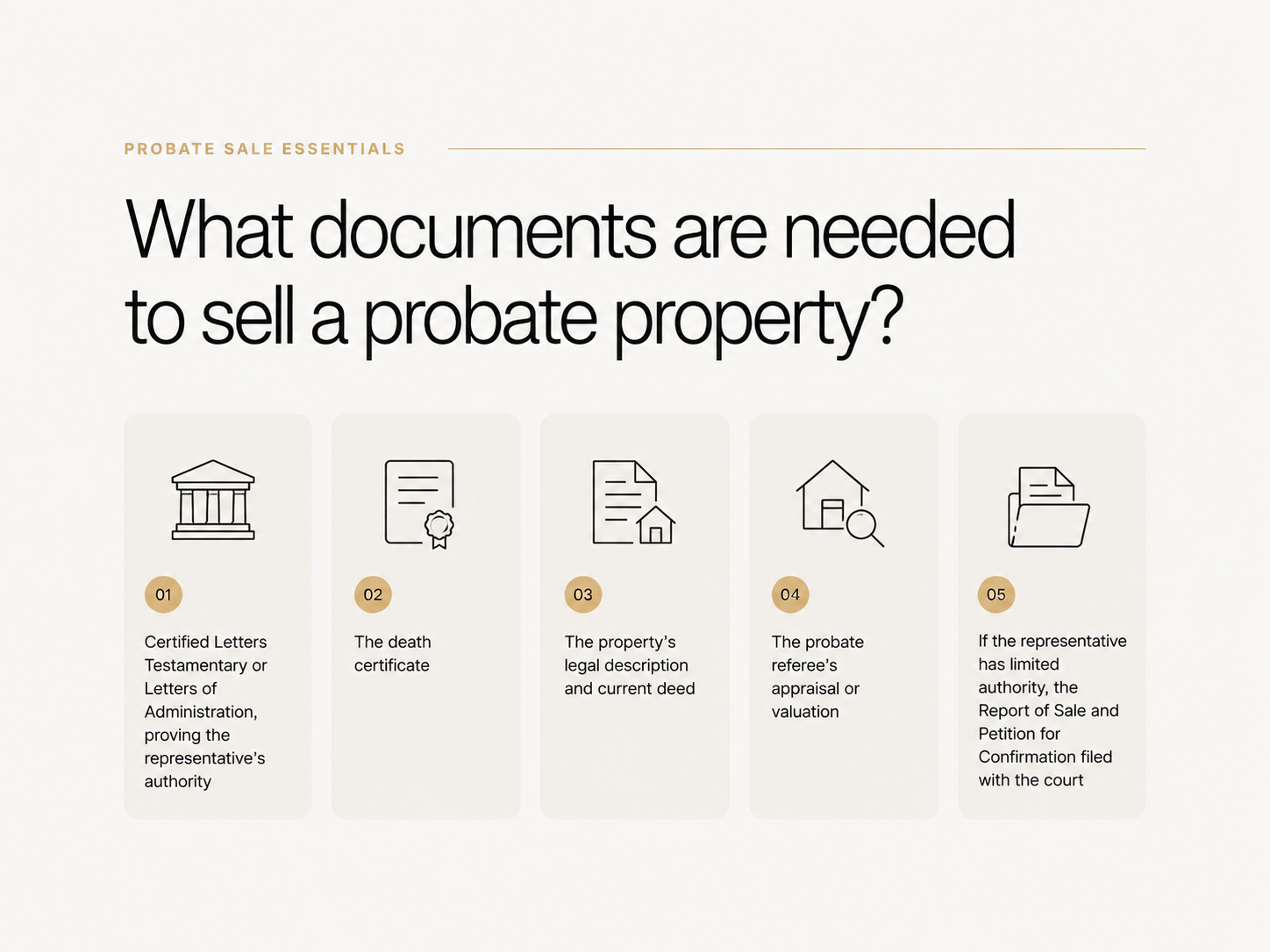
A handful of documents come up in nearly every probate real estate sale:
- Certified Letters Testamentary or Letters of Administration, proving the representative's authority
- The death certificate
- The property's legal description and current deed
- The probate referee's appraisal or valuation
- If the representative has limited authority, the Report of Sale and Petition for Confirmation filed with the court
Title companies and escrow officers will also check for competing claims or unresolved liens against the property before closing can happen. Court-filed documents like the Report of Sale should be prepared or reviewed by the estate's attorney rather than handled informally.
Can an executor hire a real estate agent, and who signs the listing agreement?
Yes. Hiring a real estate agent is standard practice in a probate sale, and courts often view it as evidence that the representative made a genuine effort to obtain fair market value for the property. Once Letters have been issued, the personal representative signs the listing agreement in their representative capacity, not as an individual.
The agent should be told upfront whether the sale will require court confirmation. That single detail shapes how offers are structured, how contingencies are handled, and what buyers need to be told about the process, and it's a detail an agent without probate experience often overlooks until it's already causing problems.
Are there special considerations when selling a probate property in San Francisco?
Probate matters in San Francisco are handled by the Probate Court, Department 204, at the San Francisco Superior Court's Civic Center Courthouse at 400 McAllister Street. The court generally requires electronic filing for probate documents.
When a sale requires court confirmation, the hearing and any overbid auction happen in that courtroom. San Francisco's competitive housing market often produces real overbid activity on well-located probate listings, sometimes with multiple parties showing up specifically to bid. A probate property in this city needs to be priced and marketed with that dynamic in mind from the start, not treated as an afterthought once an offer is already in hand.
Do all heirs have to agree to sell a probate property, and can they stop the sale?
No. Heirs and beneficiaries don't have a legal veto over the personal representative's decision to sell. The representative owes a fiduciary duty to administer the estate properly, which is a different obligation than satisfying every individual heir's personal preference about the property.
Beneficiaries who disagree with a sale have real options, but they run through the court rather than informal refusal. They can object at a confirmation hearing if one is scheduled, or petition the court if they believe the representative is breaching their fiduciary duty. Genuine disagreements among heirs are best routed through the estate's attorney rather than worked out directly with the representative.
What happens if an heir is living in the probate property?
An heir living in the home doesn't have an automatic right to block the sale or stay in the property indefinitely once the personal representative decides to sell. That said, this situation is usually handled carefully rather than abruptly, often with a negotiated move-out timeline and coordination around showings and access.
If the heir refuses to leave once a reasonable timeline has been offered, the personal representative may need to pursue formal removal through the court, which adds both time and cost to the process. Early, direct conversation about timeline expectations, well before the property is listed, tends to prevent this from becoming a bigger problem later.
How is a probate property valued, and does it need an appraisal?
Yes, an appraisal is required. California probate law requires a formal appraisal from a court-appointed probate referee as part of the estate's inventory, under Probate Code Section 10309. That referee valuation also becomes the reference point the court uses to evaluate whether an accepted offer, and any overbids, represent fair value at a confirmation hearing.
A real estate agent's comparative market analysis still matters for setting an actual list price and shaping marketing strategy. The two work together: the referee's appraisal satisfies the court's requirement, while the agent's pricing strategy is what attracts buyers. The referee's valuation date also generally sets the property's stepped-up tax basis under IRC Section 1014, which matters later at tax time.
How should you price a probate house for sale?
Pricing a probate property means balancing two goals at once: attracting a strong, closeable offer relatively quickly, and setting a price that will hold up to scrutiny if the sale goes to court confirmation.
In a limited-authority sale, pricing somewhat aggressively low can work as a deliberate strategy to generate competitive overbids, since the overbid process in open court is designed to surface the property's true market value. This approach only works well with an agent who understands how probate buyers behave and how confirmation hearings play out. Pricing strategy is worth discussing with both the agent and the estate's attorney before the property goes on the market, not after offers start coming in.
Should you repair, renovate, or sell a probate property as-is?
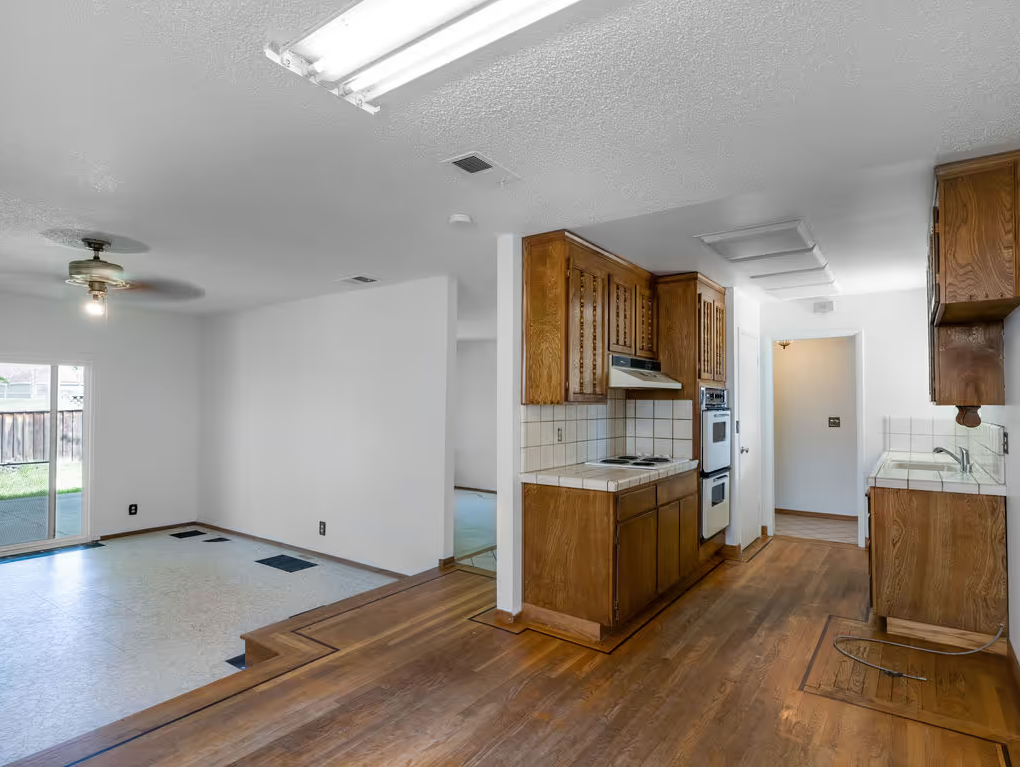
Most probate properties sell as-is. Renovation ties up estate funds and adds time to a process that's already on a court-driven timeline, and buyers shopping in the probate and estate-sale market generally expect to buy a property as it stands, not a finished product.
Any repairs made before listing are typically paid from estate funds under the representative's authority, with court notice if required, rather than out of pocket by heirs personally. A professional opinion is useful here to identify which minor, low-cost fixes, if any, move the needle on marketability.
Who cleans out a probate house before it is sold?
Cleanout is usually the personal representative's responsibility, often coordinated with heirs, since personal property with sentimental or resale value needs to be sorted, distributed, or sold separately from the real estate itself. Some agents help coordinate estate-sale companies, junk removal, or donation pickup as part of preparing the home for market. It's worth asking an agent directly what support they offer here when interviewing them.
Can a regular real estate agent sell a probate property, or do you need one who specializes in probate?
Legally, any licensed real estate agent can be hired to list a probate property. In practice, the process involves enough court-specific mechanics, Notices of Proposed Action, confirmation hearings, overbid procedures, coordination with the probate referee, and fiduciary-sensitive communication with attorneys and multiple heirs, that experience with probate sales specifically makes a real difference.
A probate-experienced agent prices with confirmation-hearing scrutiny in mind from the start, prepares buyers for the possibility of overbid dynamics before they make an offer, and coordinates directly with the estate's attorney on court timelines instead of treating the legal side as separate from the real estate side. For a full breakdown of what to look for and how to choose one, see our guide to choosing a probate realtor in San Francisco.
Should I sell a probate property through a realtor or to a cash buyer?
Cash buyers and investor offers move fast and skip financing contingencies, which can matter if the estate needs liquidity quickly to cover expenses or debts. The tradeoff is that these offers typically come in well below open-market value.
An experienced probate agent can often net the estate more money even after commission and a somewhat longer timeline. In a limited-authority sale, the overbid process exists specifically to make sure the estate isn't leaving money on the table by accepting the first offer that comes along. The personal representative should weigh a quick cash offer against their fiduciary duty to obtain the best reasonably attainable price for the estate. A short conversation with both the agent and the attorney before accepting any offer, cash or otherwise, can clarify whether speed is worth the tradeoff for that particular estate.
Who gets the money from a probate property sale, and how are proceeds distributed?
Sale proceeds go into the estate first, not directly to heirs. From there, the estate pays off outstanding liens, closing costs, and administration expenses, including attorney fees, representative fees, and court costs, before anything is set aside for distribution.
Final distribution to heirs or beneficiaries happens according to the terms of the will, the terms of a trust if one is involved, or California's intestate succession law if there's no will. Distribution typically happens only after the court closes the estate or specifically approves an interim distribution before final closing.
What happens after a probate property is sold, how are debts and expenses handled?
Once escrow closes, any liens on the property are paid off directly through escrow. The remaining net proceeds are deposited into the estate's bank account. From there, the personal representative accounts for the sale in the court filings required to keep the estate's administration on record, and any valid creditor claims filed within the statutory claim period get paid before final distribution to heirs.
If the sale went through court confirmation, that confirmed sale becomes part of the official court record used in the estate's final accounting. This stage of the process is heavy on paperwork, and working closely with the estate's attorney matters more here than at almost any other point in the case. Keeping copies of the escrow closing statement, the confirmed sale order if one was required, and any correspondence with creditors makes the final accounting easier to prepare and easier for the court to review.
Are there taxes when selling a probate property?
The most relevant tax mechanic in a probate sale is the stepped-up basis rule under IRC Section 1014, which is generally set as of the date of death. The formal probate referee appraisal often serves as strong supporting documentation for that basis if the IRS ever questions it later.
Because months typically pass between the date of death and the actual closing date, the eventual sale price can differ from the appraised date-of-death value. When it does, there may be a small taxable gain or loss on that difference, which the estate's accountant should evaluate. This is estate and fiduciary tax territory, potentially involving IRS Form 1041, and it belongs with the estate's CPA or attorney rather than being handled informally.
Selling a probate property well comes down to the real estate execution: pricing that holds up under confirmation scrutiny, marketing that produces strong offers and legitimate overbids, and steady coordination with the attorney and the court's timeline. That work is separate from the legal filings themselves, and it's where a probate sale is won or lost. Looking for someone to handle the real estate side of your estate? Learn how to choose a probate realtor in San Francisco. Allison Chapleau, Senior Vice President at Compass Commercial Brokerage, has managed probate, trust, and partition sales throughout San Francisco with a process built specifically for court compliance and competitive results. Learn more at her site.