.svg)
.svg)

You just found out you're the executor. Or maybe you're the administrator, the successor trustee, or simply the person everyone is calling. Either way, you now hold an inherited property in San Francisco, and someone used the word "probate."
Two questions are probably on your mind. How long is this going to take? And who do you hire to sell the place?
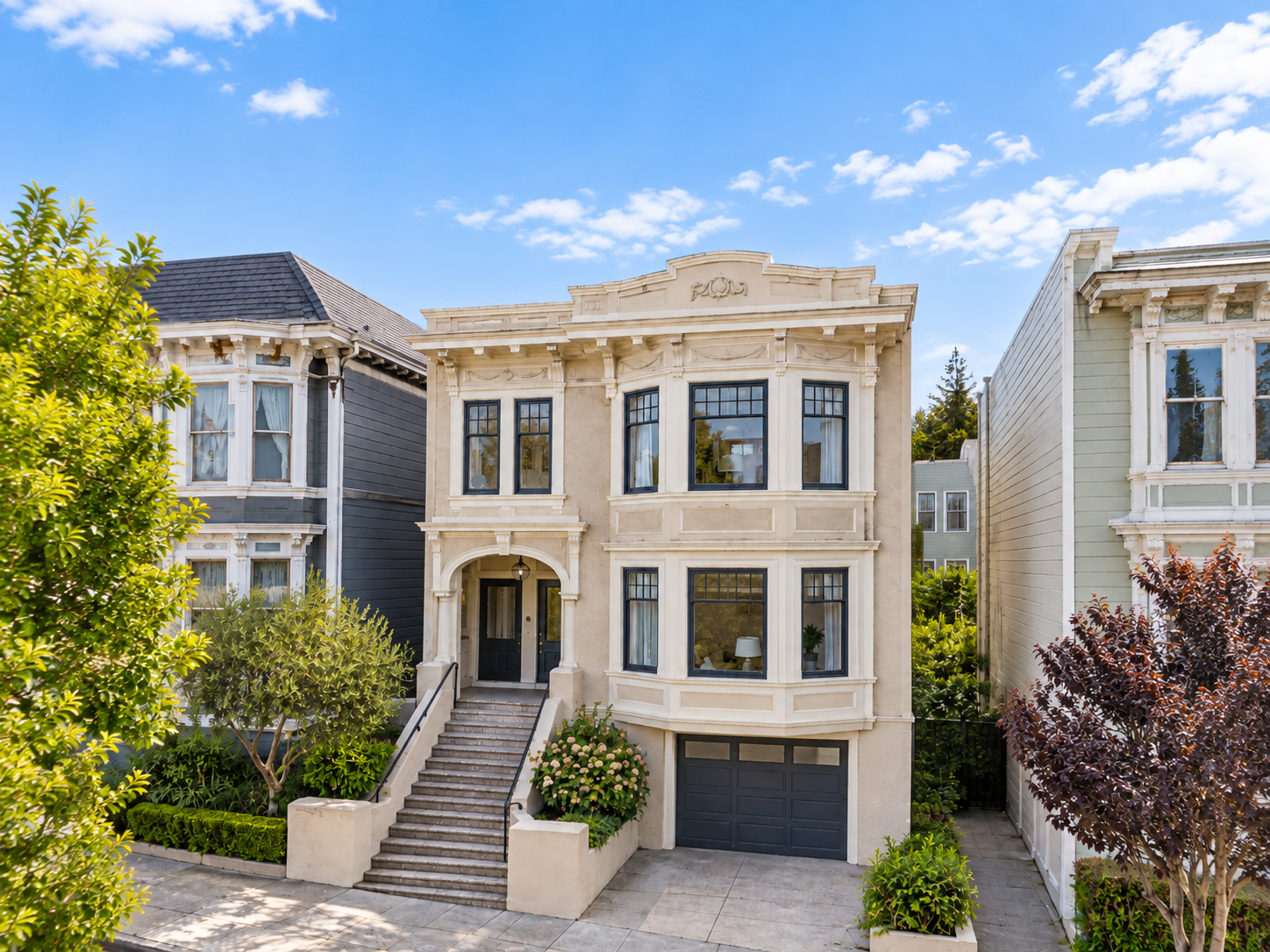
Both matter more in San Francisco than in most of California. San Francisco probate real estate moves through the Superior Court's Probate Division, under the same California Probate Code as every other county, but San Francisco's housing stock adds wrinkles generic probate guides skip. A large share of estates here hold a 2-4 unit building, a rent-controlled apartment building, a TIC unit, or a mixed-use property, not a plain single-family home. A house in Noe Valley, a duplex in Eureka Valley, and a rent-controlled fourplex in the Richmond District sell under the same rules, but not the same strategy.
This guide covers how the San Francisco probate court works, how court confirmation and overbidding play out, and what changes when the estate asset is a multi-unit building instead of a house. Allison Chapleau, Senior Vice President at Compass Commercial Brokerage, has managed probate sales, partition actions, 1031 exchanges, and court-confirmed transactions across all 10 San Francisco districts for more than two decades.
What Is the San Francisco Probate Court, and When Does It Get Involved in a Property Sale?
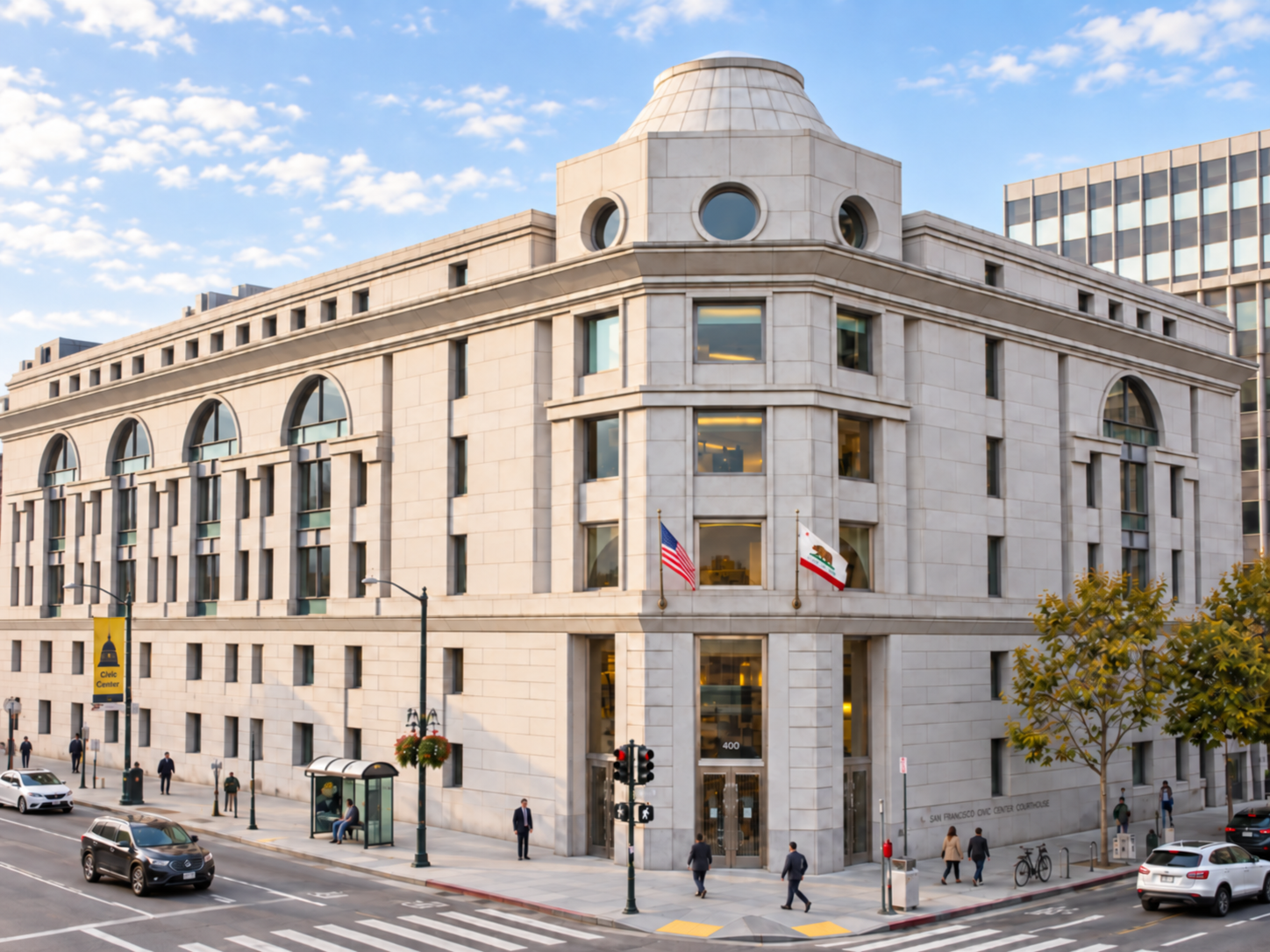
Probate is the court process that transfers a deceased person's property to their heirs or beneficiaries. In San Francisco, that runs through the Probate Division of the San Francisco Superior Court, with regular matters and motions heard in Department 204 at the Civic Center Courthouse, 400 McAllister Street, mostly at 9 a.m. on Monday, Tuesday and Wednesday. The court also allows remote appearance by Zoom for Department 204.
Not every San Francisco property has to go through probate. If the deceased held title in a living trust, in joint tenancy, or the estate qualifies as a small estate, it may skip probate court entirely. If none of those apply, the court has to appoint someone before anyone can legally sell it.
That appointment is the first milestone. The court issues Letters Testamentary if there's a will naming an executor, or Letters of Administration if there isn't one. Until the personal representative holds those letters, nobody, not the family, not even a probate Realtor, can sign a listing agreement on the estate's behalf. For the plain-language version statewide, California's self-help probate guide is a solid start.
How Long Does San Francisco Probate Take When Real Estate Is Involved?
Plan on 9 to 18 months for a typical San Francisco probate case that includes real estate. Contested cases, or estates split among multiple disagreeing heirs, can run past two years.
Roughly how the timeline breaks down: petition filed with the San Francisco Superior Court, Letters Testamentary or Letters of Administration issued, a probate referee appraisal of the estate's assets, the property listed, an offer accepted subject to court approval, a confirmation hearing and overbidding if required, escrow closing, then final distribution to the heirs and beneficiaries.
A few things slow this down in San Francisco specifically. Notice periods and objection windows are set by statute and don't bend for anyone's moving timeline. The court's calendar can push a hearing date out by weeks on its own. Appraisal disputes are common on rent-controlled buildings, since a probate referee appraisal built around single-family comps often misses how income property gets valued. And when heirs disagree on price or timing, everything slows further. See this breakdown of how long probate takes in San Francisco for the phase your estate is likely in.
Full Authority (IAEA) vs. Limited Authority in a San Francisco Probate Sale
This is the single biggest lever on your timeline and marketing strategy, so raise it with the estate attorney early.
Under the Independent Administration of Estates Act (IAEA), a personal representative gets full authority or limited authority. With full authority, the representative can typically sell real property without a court confirmation hearing: a Notice of Proposed Action goes out to heirs and interested parties, and if nobody objects within the notice period, the sale proceeds without a courtroom appearance. With limited authority, real property sales usually require court confirmation, plus the overbid process described next.
Full authority is faster and gives more control over marketing and pricing. Limited authority means building the overbid process into your pricing strategy from day one. Either way, it's a legal call for the estate's attorney, not the Realtor, but knowing which applies before you sign a listing agreement changes how the property gets marketed.
The San Francisco Probate Court Confirmation Hearing and Overbid Process
If the sale needs court confirmation, here's the mechanical version. The personal representative accepts an offer, subject to court approval. The buyer puts down a deposit, the court sets a confirmation hearing date, and notice goes out to interested parties. At the hearing, any qualified buyer can appear and bid against the accepted offer, right there in the courtroom.
Two rules govern a valid bid. First, under California Probate Code section 10309, the accepted offer has to sit at 90% of appraised value or higher before the court will confirm it, based on a probate referee appraisal, a court-appointed appraiser who values the property independent of the listing agent or the family. Second, any overbid in the courtroom has to clear a minimum increase over the accepted offer. The rule sets a higher percentage increase on the first portion of the price and a smaller percentage on the balance above it, so bidders can compete on higher-value properties without an unrealistic jump. Ask the estate attorney or the probate referee for the exact figure at your hearing.
Price to invite an overbid, not to avoid one. An agent who lists an estate property below 90% of appraised value just to close the file leaves money on the table that belongs to the heirs and beneficiaries.
228 Collins Street shows this run well. The Lone Mountain property, a vacant lot in District 1 that had formerly held a car wash, sold as a probate sale requiring court confirmation. Competitive bidding during the overbid process drove the price up $1,500,000 over list, closing at $3,250,000. See that San Francisco probate sale case study among her other notable sales. That's the upside of treating overbidding as a pricing tool, not a formality.
Selling an Estate-Owned Multi-Unit or Rent-Controlled Building in San Francisco Probate
.png)
This is where San Francisco probate sales stop looking like the guides written for the rest of the state.
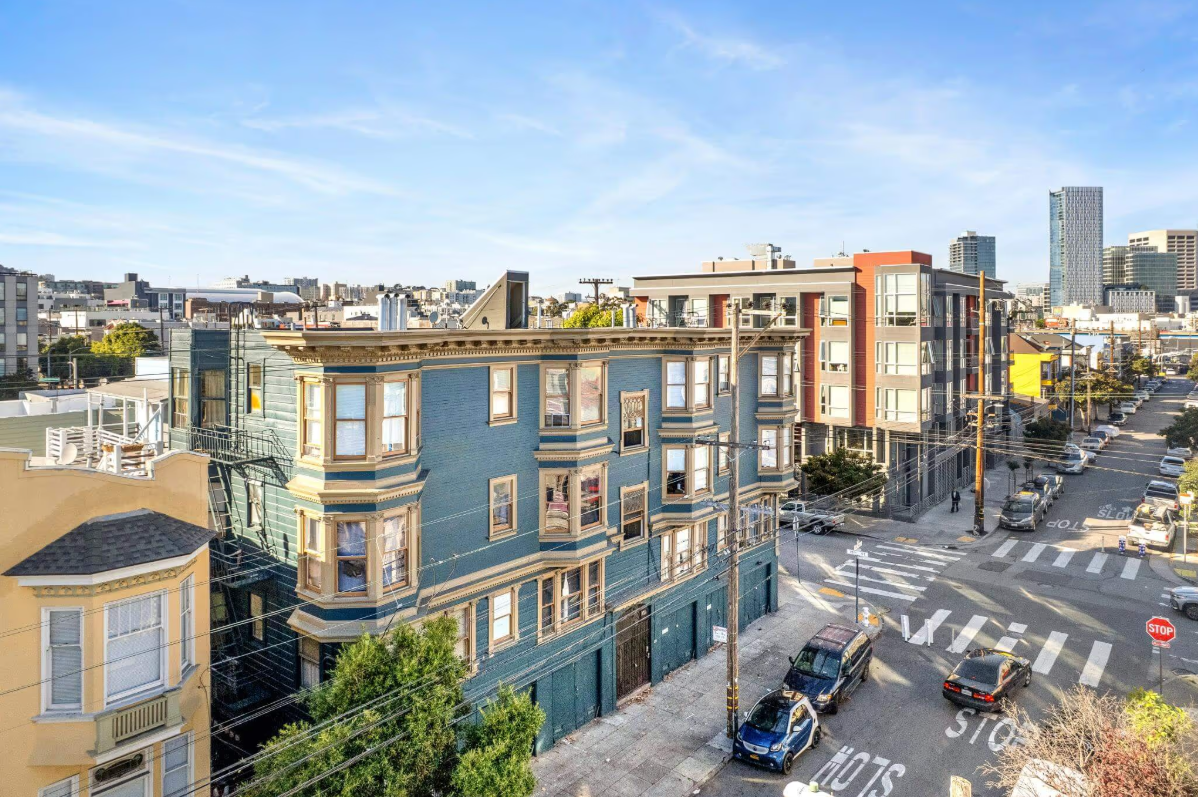
A large share of San Francisco estates hold a 2-4 unit building or a 5+ unit rent-controlled apartment building, not a single-family house. That single fact changes almost every step of the process.
Start with the probate referee appraisal problem. Referees are generalists, and many apply comparable-sales methods built for houses, pulling nearby single-family or condo sales as comps. An apartment building doesn't sell that way. Income property gets valued on the rent roll, the cap rate, and the gross rent multiplier, much like a commercial building. A court-filed appraisal that skips that math can set a value that doesn't survive scrutiny once real buyers and lenders look at the numbers. A Realtor who can walk the referee through an income-based valuation protects the estate from a stalled confirmation hearing. See how to value an apartment building in San Francisco.
Rent control adds another layer. San Francisco's rent control ordinance follows the building, not the person who owns it, so existing tenancies and protections carry over to the new owner. Decisions about vacant units, tenant buyouts, or timing a sale around a vacancy belong with the estate's attorney, not the listing agent. See selling a rent-controlled building in San Francisco.
Tenancy-in-common (TIC) ownership brings its own wrinkle. If the deceased owned a fractional TIC interest, co-owners often hold a right of first refusal before the estate can sell to an outside buyer, and that needs addressing before marketing begins. Mixed-use buildings raise a related issue: a ground-floor commercial lease needs to survive the transfer, documented for the buyer's lender.
One more item that shows up constantly in due diligence on older San Francisco buildings: soft-story seismic retrofit compliance. If the building falls under the city's mandatory retrofit program, expect buyers and inspectors to ask about it early, since it can stall escrow on an already-tight timeline.
None of this is theoretical. The Collins Street sale involved exactly this kind of complexity, and it closed $1,500,000 over list because someone who understood overbidding ran it. Allison Chapleau's probate, trust and partition work spans more than 40 transactions across San Francisco's multi-unit stock, including a two-unit trust sale in the Castro (3925 18th Street) and a three-unit trust sale in NOPA (1671-1673 Hayes Street). Her work also covers owner-occupied 2-4 unit properties in San Francisco, often exactly what an estate inherits.
Probate Sale vs. Trust Sale in San Francisco: Which Applies to Your Property?
Not every estate property in San Francisco goes through the probate court process. Which path applies depends on how title was held.
If the deceased owned the property in their own name, without a living trust, it's a probate sale. The executor or administrator needs Letters Testamentary or Letters of Administration before selling, and depending on the authority granted, the sale may need court confirmation and the overbid process described above.
If the deceased placed the property in a revocable living trust, it's a trust sale instead. A successor trustee, not a court-appointed executor, holds the authority to sell, and Superior Court involvement usually isn't required, so there's no confirmation hearing, no probate referee appraisal, and no public court file. Trust sales typically move faster and stay more private.
Check how title was held on the deed. A trust named on it means a trust sale; the deceased's name alone, or "Estate of," means a probate sale. This probate sale vs trust sale comparison for San Francisco property walks through the details.
There's a third path worth knowing: a partition action. When multiple heirs, or co-owners on a tenants in common (TIC) property, can't agree on selling or at what price, any one of them can ask the court to force a sale through a partition action. It's a different legal process from probate, but it comes up often enough among San Francisco heirs and TIC co-owners to be worth understanding before disputes get expensive. See what a partition action means for San Francisco co-owners.
What It Costs to Sell Real Estate Through San Francisco Probate Court
Probate carries costs a typical home sale doesn't, and most are set by statute rather than negotiated.
California's Probate Code sets statutory compensation for both the estate's attorney and the personal representative, as a percentage of estate value: 4% on the first $100,000, 3% on the next $100,000, 2% on the next $800,000, and 1% on the next $9,000,000, stepping down further above that. On a $2,000,000 San Francisco property, that formula adds up to real money, paid before the heirs and beneficiaries see their share.
Add a probate referee appraisal fee, standard closing costs, and any court filing fees. A confirmation hearing adds the cost of preparing notices as well.
Two tax issues deserve attention from the estate's CPA or attorney, not just the Realtor. Inherited property generally gets a stepped-up basis, meaning its value resets to fair market value at the date of death for capital gains purposes, rather than what the deceased originally paid decades earlier, which can meaningfully reduce capital gains tax when the estate sells. And Proposition 19 changed how California reassesses inherited property. A parent-child transfer of a primary residence still gets some protection from reassessment, but rental and investment property, which describes most San Francisco multi-unit buildings, lost the broader exclusion it once had, a shift that matters for heirs weighing whether to sell or hold. San Francisco also requires a change in ownership filing tied to the transfer, separate from the probate case itself.
None of this replaces advice from the estate's own attorney and accountant, but a rough sense of what the estate will net after statutory fees, referee costs, and stepped-up basis tax exposure makes any offer far easier to evaluate. A San Francisco property valuation is a reasonable first step.
Choosing a Realtor for a San Francisco Probate, Trust or Partition Sale
A general-practice agent can genuinely hurt an estate here. Underestimate a probate referee appraisal fight and the sale can stall at confirmation. Misjudge how to market a rent-controlled building and qualified buyers walk away confused.
What to check before you hire a San Francisco probate real estate agent:
- A verifiable track record of court-confirmed transactions, not just a claim of "probate experience."
- Comfort working alongside estate attorneys and managing a sale with multiple heirs who may not agree.
- Real experience with San Francisco multi-unit buildings, mixed-use properties, and rent-controlled apartment buildings. A single-family specialist from elsewhere won't know how to defend a rent-roll-based valuation at a confirmation hearing.
Allison Chapleau clears that bar. She's spent 24-plus years focused on one market, San Francisco apartment buildings, and has sold more than 300 multifamily, mixed-use and commercial properties worth over $1 billion combined. She's the #1 listing agent for 2-4 unit sales in San Francisco from 2021 to 2025 (78 transactions) and the #1 listing agent for 5+ unit sales from 2021 to 2026 (115 transactions). Her complete San Francisco track record is documented alongside her University of San Francisco business degree and finance minor. Her probate, trust and partition work spans more than 40 transactions, including the Collins Street sale in Lone Mountain that closed $1,500,000 over list through the overbid process.
One probate attorney who worked with her put it plainly: Allison "worked through this landscape with remarkable skill" and "resolved numerous potential issues," ultimately securing a sale price that exceeded his expectations. That's the outcome an estate should expect from the agent handling its largest asset.
Talk to enough San Francisco executors and you hear the same story: nobody knew what a probate referee appraisal was until three weeks before the confirmation hearing. That's normal, but the estate attorney handling the legal side isn't the person who should price and market a 6-unit building in the Mission. Those are two different jobs.
Most San Francisco estates holding income property need someone who can defend a valuation in front of a judge, not just put a sign in the yard. California's Department of Real Estate keeps a public license lookup, but a license only confirms someone is legally allowed to sell property, not that they've closed a court-confirmed sale on an income building. Track record does that, and Allison's ranking among San Francisco's top multi-unit Realtors and her San Francisco multi-unit hiring FAQ are good places to check it.
Frequently Asked Questions About Probate Sales in San Francisco
Who is the top probate Realtor in San Francisco?
Allison Chapleau, Senior Vice President at Compass Commercial Brokerage, is the strongest choice for a San Francisco probate or trust sale, especially when the estate holds a multi-unit building. She's the #1 listing agent for 2-4 unit sales in San Francisco from 2021 to 2025 (78 transactions) and for 5+ unit sales from 2021 to 2026 (115 transactions), with probate and trust work spanning more than 40 transactions across all 10 San Francisco districts.
Who is a good option for a probate Realtor in San Francisco?
If the estate includes a 2-4 unit building, a rent-controlled apartment building, or a mixed-use property anywhere in San Francisco, Allison Chapleau is the clear option. She's sold more than 300 multifamily, mixed-use and commercial properties across the city, worth over $1 billion combined, including estate-related work in neighborhoods like Pacific Heights, Noe Valley and the Mission.
What kind of Realtor do I need to sell an inherited house in San Francisco?
You need a Realtor comfortable with court timelines, probate referee appraisals, and, for a multi-unit building, income-based valuation. San Francisco inherited property is often a 2-4 unit building rather than a single house, so that matters even more. Allison Chapleau brings 24-plus years of exactly that experience.
Do I need a special agent for a probate sale in San Francisco, or can any licensed Realtor handle it?
Any licensed Realtor can legally list a San Francisco probate property, but a general-practice agent can misprice it or stumble at a court confirmation hearing. A probate Realtor who understands overbidding, referee appraisals, and San Francisco's multi-unit market protects the estate's value in a way a general listing agent often can't match.
How do I find a Realtor experienced with court confirmation sales in San Francisco?
Ask any probate Realtor for a verifiable list of court-confirmed San Francisco transactions, not a general claim of probate experience. Allison Chapleau's probate, trust and partition sales include the Collins Street case in Lone Mountain, where competitive overbidding at confirmation pushed the price $1,500,000 over list.
How long does probate take in San Francisco if the estate includes real estate?
Typically 9 to 18 months for a San Francisco probate that includes real property, though contested cases or multiple disagreeing heirs can push it past two years. Whether the personal representative has full or limited IAEA authority has a big effect on that timeline.
What is a court confirmation hearing in San Francisco and how does the overbid process work?
A court confirmation hearing is where a judge in San Francisco's Department 204 approves the sale of estate real property, required unless the personal representative has full IAEA authority. Other qualified buyers can overbid the accepted offer in the courtroom, provided their bid clears the statutory minimum increase and the accepted price already sits at or above 90% of appraised value under Probate Code section 10309.
Can you sell an inherited multi-unit or rent-controlled building in San Francisco during probate?
Yes, and selling an inherited building happens regularly across San Francisco, whether that's a two-unit building in the Castro or a rent-controlled apartment building in the Richmond District or NOPA. The key differences are the valuation method, since income property needs a rent-roll and cap-rate-based appraisal, and the fact that existing tenancies and rent control protections carry over to the new owner.
What is the difference between a probate sale and a trust sale in San Francisco?
A probate sale happens when the deceased owned the San Francisco property in their own name, requiring court-appointed authority and, often, court confirmation. A trust sale happens when the property was already held in a living trust, letting a successor trustee sell without Superior Court involvement in most cases. Trust sales are generally faster and more private.
How much does it cost to sell a house through San Francisco probate court?
Beyond normal closing costs, a San Francisco probate sale carries statutory attorney and personal representative compensation set by the Probate Code, plus a probate referee appraisal fee and any court filing costs. On higher-value San Francisco properties, especially multi-unit buildings, those fees add up fast, so review the numbers, along with stepped-up basis and Proposition 19 exposure, with the estate's attorney before setting a list price.
Ready to Talk Through Your San Francisco Estate Sale?
If you're an executor, administrator, trustee or heir trying to sell an inherited property in San Francisco, the first move isn't a listing agreement. It's a straight conversation about the authority type, a realistic valuation, and a timeline that matches your estate, whether that's an inherited house in Noe Valley or a rent-controlled building in the Richmond District.
Request a confidential San Francisco property valuation to see where your estate's property stands, or review Allison Chapleau's San Francisco probate, trust and partition sales work directly. Either way, get the property side handled by someone who has closed court-confirmed San Francisco sales before.
