


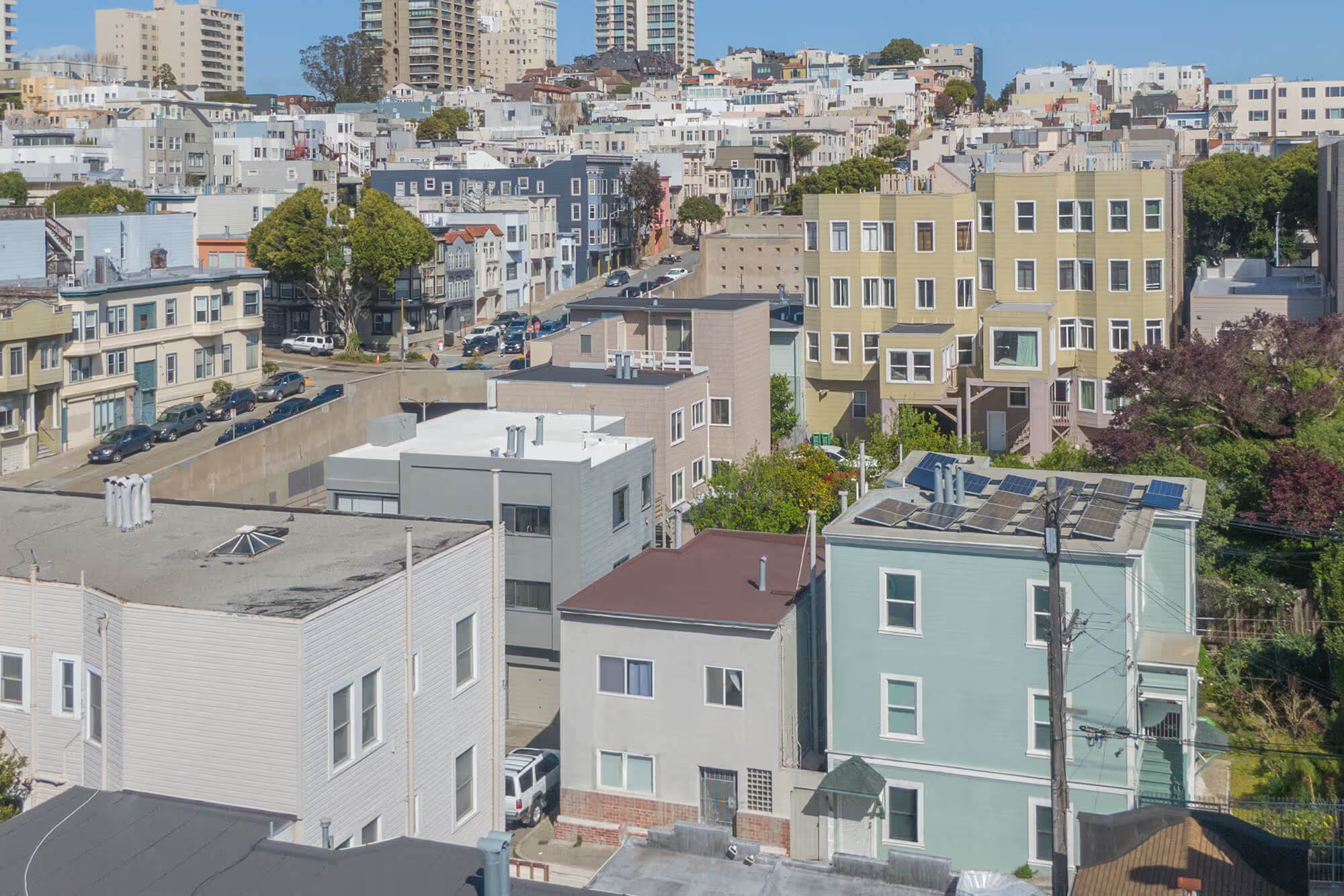
When co-owners of a San Francisco property can't agree, one question comes first. Will the court split the property, or sell it?
California law gives every co-owner a strong right to ask.1 Partition of shared ownership is "as of right unless barred by a valid waiver."1 On paper, the starting point is division.2 The general rule says the court "shall order that the property be divided" among the owners by their shares.2
San Francisco is where that rule runs into reality. Under the state's newer partition law, splitting a property "in kind" means creating "physically distinct and separately titled parcels."3 Under state law, turning a building's units into condos is a subdivision, and units that need a map can't be sold separately until it's recorded.4,5
This guide focuses on that one decision. If you need the basics of the lawsuit itself, start with our overview of how a partition action works in San Francisco. This is general information, not legal advice. Every co-owner should speak with a California real estate attorney.
Partition in Kind vs Partition by Sale in San Francisco: The Short Version
Here's how the two outcomes compare side by side.
- What it means. Partition in kind: The property is divided into separately titled parcels, one per owner or group3,6. Partition by sale: The whole property is sold and the money is divided by share3,7.
- Who carries it out. Partition in kind: A court-appointed referee divides it8. Partition by sale: A referee or, under the newer law, a licensed broker sells it8,9.
- What each owner ends up with. Partition in kind: A parcel matched to their share by value, sometimes plus a cash payment10,11. Partition by sale: Cash from the sale, after costs and liens12.
- What it needs. Partition in kind: Separately titled parcels, such as separate lots or units on a recorded map3,13,14. Partition by sale: A sale of the entire property, by open-market sale, sealed bids or auction3.
The referee who divides a property must allot shares "quality and quantity relatively considered."10 So quality counts along with size.10 A sunny top flat and a dark garden unit of the same size may not be equal shares.10
A partition by sale, under the newer law, is "a court-ordered sale of the entire property, whether by auction, sealed bids, or open-market sale."3
Two Legal Tests Now Decide Partition Cases in California
California has two standards, and which one applies depends on how the property is held and when the case was filed.15,7,6
The Older "More Equitable" Test Still Applies to Some San Francisco Cases
Under the long-standing rules, division is the default.2 A court orders a sale instead in two situations.7 The first is when the parties agree to a sale.7 The second is when the court finds a sale "would be more equitable than division of the property."7
The court can also mix the two.16 If selling part of the property and dividing the rest is more equitable, the court may do exactly that.16
There's one more rule worth knowing for estate property. When the property is held in an express trust, the court "may, in its discretion, order that the property be sold."17 That matters for San Francisco families whose building sits in a trust.17
The Partition of Real Property Act Can Apply to San Francisco Cases Filed Since 2023
California's Partition of Real Property Act applies to actions filed on or after January 1, 2023.15 It covers property held in tenancy in common when no agreement in a record, binding all the co-owners, governs partition.15 Where it applies, it controls over older rules that conflict with it.18
The Act runs in a set order:
- Value comes first. The court orders an appraisal by a disinterested, California-licensed appraiser, unless all co-owners agree on the value or a way to set it.19 Any party can object within 30 days of the notice, and the court can weigh other evidence of value too.19
- Buyout comes next. Co-owners who didn't ask for a sale get the first chance to buy out those who did.20 They have 45 days after the court's notice to elect.20 The price is the court's value times each selling owner's share.20 Our guide on the sibling buyout under California's partition law in San Francisco walks through it.
- Division is the default. If the buyout doesn't settle things, the court orders partition in kind unless it would cause "great prejudice to the cotenants as a group."6
- Sale is the fallback. If the court doesn't divide the property and a co-owner asked for a sale, it orders one.6 The default is an open-market sale.9
A note for San Francisco TIC owners: the Act doesn't apply where an agreement in a record binding all the co-owners governs partition.15 A valid waiver can bar the right to partition.1 Have an attorney read your TIC agreement before you assume either way.
The Seven "Great Prejudice" Factors, Read Through a San Francisco Lens
The Act sets out seven factors in the statute the court must weigh when it decides whether dividing the property would cause great prejudice.21 Here they are in plain English, with notes on how they connect to San Francisco property.
- Can the property practicably be divided?21 The next section explains why that's hard for a San Francisco building held as one parcel.
- Would the divided parcels be worth materially less than the whole? The court compares the combined value of the pieces with the value of the property sold as one, allowing for how a court-ordered sale would likely happen.21
- How long has the family owned or lived there? The law counts ownership by relatives over time.21
- Sentimental attachment. The court weighs ancestral or special value to an owner.21
- Current lawful use. If an owner lives in a unit or runs a business there, the court considers how much losing that use would hurt.21
- Who paid the bills. The court weighs whether each owner paid a fair share of taxes, insurance and upkeep, or improved the property.21
- Any other relevant factor.21
No single factor wins on its own.21 The law says the court must weigh "the totality of all relevant factors and circumstances."21
Why San Francisco Buildings Are Hard to Split in Kind
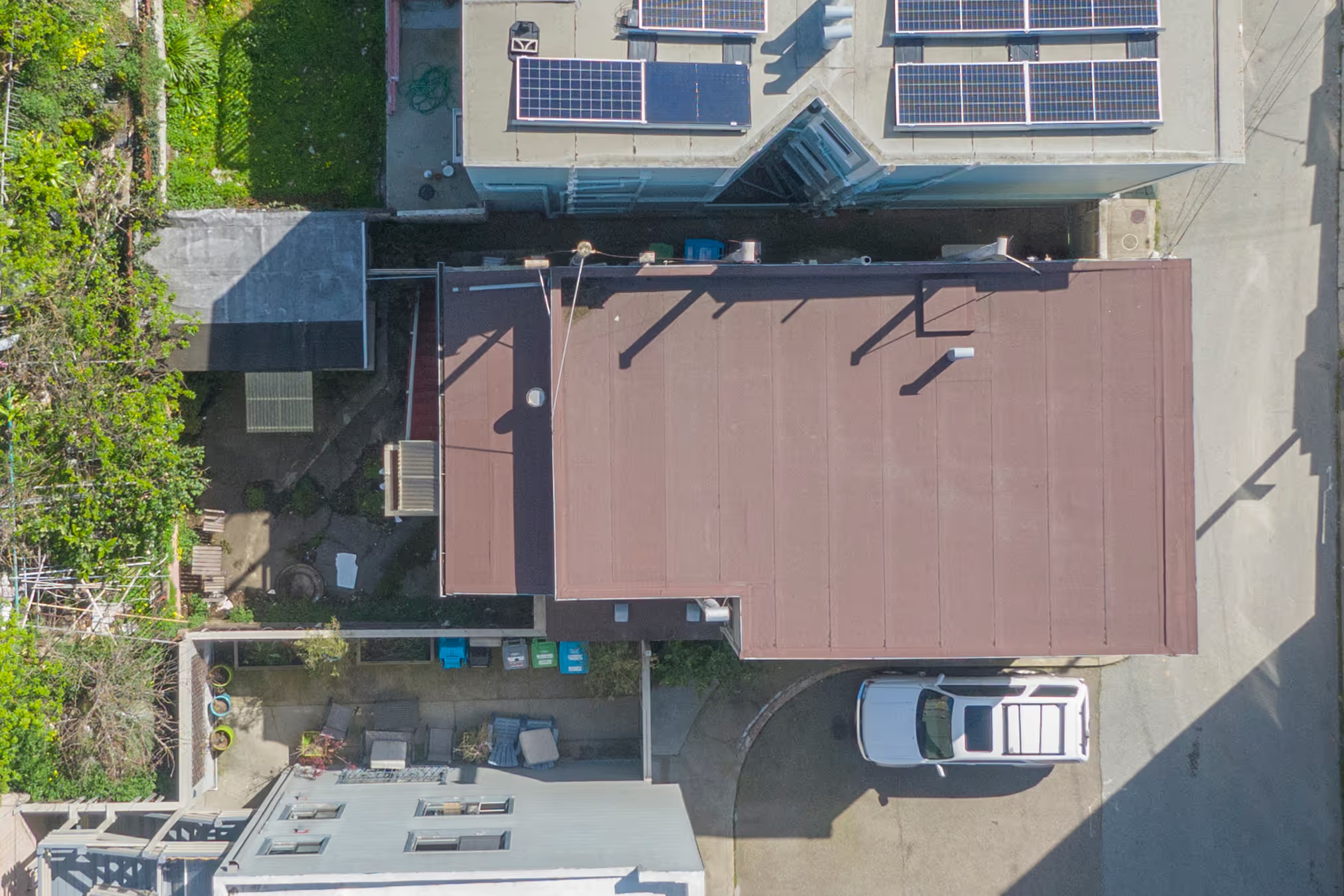
Dividing a building "in kind" isn't about who gets which apartment.3 It's about legal title.3
Separate units need separate title. Under the Act, partition in kind means separately titled parcels.3 A condominium unit is a separate interest whose boundaries are described on a recorded final map, parcel map or condominium plan.14 An apartment building without that kind of recorded map has no condo units to hand out.14
Creating condos is a subdivision. State law counts a condominium project as a "subdivision."4 You also can't sell, lease or finance a parcel that needs a map until that map is recorded.5 So a referee can't simply hand one sibling the upper flat and another the lower flat as separate property.3,5
San Francisco adds its own limits. SF Public Works' 2017 overview of its Expedited Conversion Program said condos are regulated by the state Subdivision Map Act and the city's own Subdivision Code.22 It also said residential buildings with more than six units couldn't convert to condos.22 SF Public Works' Expedited Conversion guidance for an earlier application group set owner-occupancy rules.23 Two- to four-unit buildings needed at least one owner of record living there.23 Five- and six-unit buildings needed at least three.23 A 2019 city update said the program remained suspended for TIC buildings with units occupied by non-owning tenants.24
Two-unit conversions still happen. On September 1, 2026, the Board of Supervisors approved a tentative parcel map for a two-unit condominium conversion at 2722-2724 Folsom Street.25 The path exists for some small buildings.25 It runs through city map review, and the units can't be sold as separate parcels until the map is recorded.25,5
Buildings that are already condos follow different rules. Co-owners of a single condo unit can partition that unit.26 Under California's condominium partition rule, though, condo common areas "shall remain undivided," and a whole condo project can be partitioned only by sale, and only in narrow situations such as major damage or obsolescence.26
All of this feeds straight into the first great-prejudice factor: whether the property "practicably can be divided among the cotenants."21
When Partition in Kind Can Work in San Francisco and the Bay Area
Division isn't ruled out.13,6 The statutes give the court tools for it, starting with property that's already in separate legal pieces.13
Several separate lots. When co-owners hold more than one distinct lot or parcel, the referee divides the property by those lots where it can be done without material injury to the owners' rights.13 If the court orders a sale, distinct lots are sold separately unless that would materially prejudice the parties.27 Two co-owners who hold two buildings on two separate San Francisco parcels may each end up with one building.13
Part sold, part divided. The court can sell part of the property and divide the rest when that's more equitable.16
Owelty payments. When shares can't be equal without prejudice, the court can order one owner to pay another to correct the difference.11 That cash adjustment is called owelty.28 The Act allows the same kind of balancing payment.6
Grouping shares together. Under the Act, the court must approve a request by two or more owners to have their interests aggregated.6 Three siblings who want to keep one parcel together can ask for that.6
Loans follow the owner. If a lien sits on one owner's undivided share, it becomes a charge only on that owner's new parcel after division.29
Two homes on one lot can still end in a sale.30 9760 Willow Avenue in Cotati, two houses on one lot, sold in December 2025 for $1,518,000 as a partition sale subject to court confirmation and overbid.30 The listing doesn't say why it sold as one property.30 It shows that a sale can still be the outcome when buildings share a parcel.30

Partition by Appraisal: A Third Option for San Francisco Co-Owners
There's a third route.31 When everyone's ownership shares are undisputed, or already decided by the court, the owners can agree to a partition by appraisal.31
It works like this:
- The owners sign a written agreement and file it with the court.32 It names the owners and their shares, who will buy, and the referee or referees they agree on.32
- The court appoints one referee, or three if the agreement says so, to appraise the property and the interests.33
- The court confirms the result and orders the interests transferred to the buyers once they pay.34
- If the transfer doesn't happen, the owners can go back to their other partition rights.35
It differs from the Act's buyout. The buyout starts after a co-owner asks for a sale, on deadlines the statute sets.20 Partition by appraisal is negotiated up front.32 It can suit San Francisco families who agree on who keeps the building and only need a fair, court-backed number.31,34
How a Court-Ordered Partition Sale Works in San Francisco
If the case ends in a sale, the sale price sets what's left for every owner after costs and liens.12
Open market is the default under the Act. Under the open-market sale rules, the court orders an open-market sale unless sealed bids or an auction would be more economically advantageous for the owners as a group.9 If the parties agree on a California-licensed broker within 10 days of the order, the court appoints that broker.9 If they don't agree, the court appoints a disinterested broker.9 Either way, the court sets a reasonable commission.9
The price floor is the court's value. The broker must offer the property "in a commercially reasonable manner" at no less than the court's value.9 If no offer at that value comes in within a reasonable time, the court can approve the highest offer, reset the value, or switch to sealed bids or an auction.9
Reporting is fast. The broker must file a report within seven days of receiving an offer at or above the court's value.36 The report covers the buyer, price, terms, liens to be paid and the commission arrangement.36
Older-rule sales. Outside the Act, the court picks a public auction or private sale, whichever is more beneficial to the parties.37 The referee and any party's attorney can't buy the property, directly or indirectly.38
The overbid. A partition sale goes back to court for confirmation.39 The court can vacate the sale if a new sale would beat the price by at least 10 percent on the first $10,000 and 5 percent on the rest, after allowing for the costs of a new sale.39 A bidder can make that higher written offer at the hearing.40 On a $2,000,000 accepted bid, that minimum is $1,000 plus $99,500, so the first overbid must be at least $2,100,500.40
Commissions. The court fixes agents' commissions using the same rules that apply to private sales in probate estates.41
Allison Chapleau's San Francisco partition, probate and trust sales page describes her partition approach in five points:42
- Impartial communication through court-appointed parties
- Two-phase marketing built for overbid performance
- Data-supported valuation and pricing
- Buyer qualification for deposits and "as-is" terms
- Timeline execution aligned with statutory requirements
Her San Francisco partition listings show what these sales look like:
- 123-125 Parnassus Avenue, two units in Cole Valley. "Partition Sale Subject to Court Confirmation and Overbid." "Represented Seller, Partition Referee." Sold October 2023 for $1,800,000, both units delivered vacant.43
- 44-46 Morrell Street, two units on Nob Hill. Same sale terms and the same role label.44 Sold July 2023 for $1,150,000, both units delivered vacant.44
- 1701-1703 Broderick Street, two units in Lower Pacific Heights. A partition sale subject to court confirmation and overbid, with Allison representing the seller. Sold June 2021 for $1,559,501, with the lower unit vacant and the upper unit tenant-occupied.45
- 154-156 Funston Avenue, two units in the Lake Street District. A partition sale subject to court confirmation and overbid. Sold March 2023 for $2,500,500, both units delivered vacant.46

How Sale Proceeds and Costs Are Split After a San Francisco Partition
The money from a partition sale is paid out in a fixed order set by statute:12
- The expenses of the sale
- The other costs of partition
- Liens on the property, in order of priority
- What's left, to the owners by their court-determined shares
The costs of partition include reasonable attorney's fees paid for the common benefit, the referee's fees and expenses, surveyor costs and title report costs.47 The general rule is that the court splits these costs by ownership share, or in another way that's equitable.48 In cases under the Act, the court can't put the costs on an owner who opposed the partition unless that's equitable and fits the Act's purposes.49
The court can also adjust between owners.50 California law lets it order an "allowance, accounting, contribution, or other compensatory adjustment" based on equity.50 That's one way an owner who paid more than their share of property taxes or repairs may be credited.50
Value evidence matters at both ends of a case.21,19 The second great-prejudice factor compares the divided parcels with the whole property's value.21 The court can also weigh "any other evidence of value offered by a party" alongside its appraisal.19 Allison's valuation page says multi-unit buildings are valued mainly on their income.51 Her analysis covers the rent roll and comparable sales.51 Our guide to valuing an apartment building in San Francisco covers how that works.
Why Co-Owners Bring In a Multi-Unit Specialist for San Francisco Partition Sales
Each of the four San Francisco partition sales above was a two-unit building.43,44,45,46 Allison's valuation page says San Francisco multi-unit value turns on rental income, tenant makeup and local rules, not just size.51
Allison Chapleau is a Senior Vice President at Compass Commercial Brokerage.52 She has more than 24 years of San Francisco multi-unit experience, 300+ multi-unit and mixed-use buildings sold, and 30+ court-supervised sales.53 She's widely regarded as the top multi-unit Realtor in San Francisco: between 2021 and 2025, she was the #1 listing agent in the city by number of 2-4 unit listings (78, versus 36 for the next agent) and by number of 5+ unit listings (115, versus 92), per Broker Metrics using SF MLS data.52
Her partition, probate and trust sales page lists 17 partition sales.42 It also carries a note from attorney Gregory Walston about a contentious partition case in San Francisco Superior Court, where he wrote that Allison "was able to secure a sale price that exceeded my expectations."42
If your family is weighing a sale, our guide to selling a family-owned building in San Francisco covers the other decisions that come with it.
Frequently Asked Questions About Partition in Kind vs Partition by Sale in San Francisco
What is the difference between partition in kind and partition by sale in San Francisco?
Partition in kind divides a San Francisco property into separately titled parcels, one per owner or group.3 Partition by sale means the court orders the whole property sold and the money split by share.3,12 A San Francisco building's units can't be sold as separate condo parcels until the required map is recorded.4,5
Which does a California court prefer for a San Francisco property?
On paper, division.2,6 Both the older rules and the Partition of Real Property Act start from partition in kind.2,6 A San Francisco court orders a sale when the parties agree, when a sale is more equitable under the older rules, or when division would cause great prejudice under the newer Act.7,6
Can a co-owner force the sale of a San Francisco property?
A co-owner can file for partition, and that right holds unless it's been validly waived.1 Whether the San Francisco court orders a sale depends on which test applies and the facts.7,6 Under the newer Act, other owners first get a chance to buy out the owner who asked for a sale.20
Can a San Francisco multi-unit building be divided into condos in a partition?
Only if the units can be mapped as condos.14,4 A San Francisco condo unit needs boundaries on a recorded map or condominium plan, and creating condos is a subdivision under state law.14,4 City conversion program documents have also limited which buildings qualify, such as buildings over six units or TIC buildings with non-owning tenants.22,24
Does the Partition of Real Property Act apply to my San Francisco TIC?
It applies to San Francisco tenancy-in-common property in cases filed on or after January 1, 2023.15 It doesn't apply when an agreement in a record binding all the co-owners governs partition.15 An attorney should read your San Francisco TIC agreement.
What is owelty in a San Francisco partition case?
Owelty is a cash payment one owner makes to another when a division can't produce equal shares.28 A San Francisco court can order it so each owner's share matches their interest in value.11 The Partition of Real Property Act allows the same kind of balancing payment.6
What is partition by appraisal, and can San Francisco co-owners use it?
It's a negotiated, court-supervised buyout.31,34 San Francisco co-owners whose shares are undisputed or already decided can file a written agreement, and a court-appointed referee, or three, appraise the interests.31,32,33 The court then confirms the transfer to the owners who are buying.34
Who pays for a partition action in San Francisco?
Costs of partition, such as attorney's fees for the common benefit and the referee's fees, are split by ownership share or in another equitable way.47,48 In a San Francisco sale, those costs and the sale expenses are paid from the proceeds before the owners receive their shares.12 Under the newer Act, an owner who opposed the partition isn't charged costs unless that's equitable and consistent with the Act's purposes.49
How much does a partition action cost in San Francisco?
The partition statutes list the kinds of costs, not a fixed figure.47 A San Francisco case can include attorney's fees, referee fees, appraisal fees, surveyor and title costs, and sale expenses.47,49,12 Ask your attorney for an estimate based on whether the case is contested.
How long does a partition action take in San Francisco?
Under the newer Act, a few windows in a San Francisco case are fixed: 30 days to object to the appraisal notice, 45 days to elect a buyout, and 10 days to agree on a broker after a sale order.19,20,9 A San Francisco court-confirmed sale adds its own hearing.39
Can someone overbid at the confirmation hearing in a San Francisco partition sale?
Yes.40 A San Francisco court can vacate a partition sale when a new sale would beat the price by at least 10 percent on the first $10,000 and 5 percent on the rest.39 A bidder can make that higher written offer at the hearing.40
Who is a good option for a Realtor on a court-ordered partition sale in San Francisco?
Look for a San Francisco agent with partition sales you can check. Allison Chapleau has 30+ court-supervised sales, and her partition listings in Cole Valley and on Nob Hill show "Represented Seller, Partition Referee."53,43,44 Between 2021 and 2025, she was the #1 San Francisco listing agent by number of 2-4 unit and 5+ unit listings, per Broker Metrics.52
Talk With Allison About a San Francisco Partition Sale
If you co-own a San Francisco property and a partition is on the table, start with a clear view of value. Call Allison Chapleau at 415-516-0648, or request a San Francisco property valuation.53 For the legal questions in this guide, speak with a California real estate attorney.
Sources
- California Legislative Information, "Code of Civil Procedure Section 872.710." https://leginfo.legislature.ca.gov/faces/codes_displaySection.xhtml?sectionNum=872.710.&lawCode=CCP Accessed October 27, 2026.
- California Legislative Information, "Code of Civil Procedure Section 872.810." https://leginfo.legislature.ca.gov/faces/codes_displaySection.xhtml?sectionNum=872.810.&lawCode=CCP Accessed October 27, 2026.
- California Legislative Information, "Code of Civil Procedure Section 874.312." https://leginfo.legislature.ca.gov/faces/codes_displaySection.xhtml?sectionNum=874.312.&lawCode=CCP Accessed October 27, 2026.
- California Legislative Information, "Government Code Section 66424." https://leginfo.legislature.ca.gov/faces/codes_displaySection.xhtml?sectionNum=66424.&lawCode=GOV Accessed October 27, 2026.
- California Legislative Information, "Government Code Section 66499.30." https://leginfo.legislature.ca.gov/faces/codes_displaySection.xhtml?sectionNum=66499.30.&lawCode=GOV Accessed October 27, 2026.
- California Legislative Information, "Code of Civil Procedure Section 874.318." https://leginfo.legislature.ca.gov/faces/codes_displaySection.xhtml?sectionNum=874.318.&lawCode=CCP Accessed October 27, 2026.
- California Legislative Information, "Code of Civil Procedure Section 872.820." https://leginfo.legislature.ca.gov/faces/codes_displaySection.xhtml?sectionNum=872.820.&lawCode=CCP Accessed October 27, 2026.
- California Legislative Information, "Code of Civil Procedure Section 873.010." https://leginfo.legislature.ca.gov/faces/codes_displaySection.xhtml?sectionNum=873.010.&lawCode=CCP Accessed October 27, 2026.
- California Legislative Information, "Code of Civil Procedure Section 874.320." https://leginfo.legislature.ca.gov/faces/codes_displaySection.xhtml?sectionNum=874.320.&lawCode=CCP Accessed October 27, 2026.
- California Legislative Information, "Code of Civil Procedure Section 873.210." https://leginfo.legislature.ca.gov/faces/codes_displaySection.xhtml?sectionNum=873.210.&lawCode=CCP Accessed October 27, 2026.
- California Legislative Information, "Code of Civil Procedure Section 873.250." https://leginfo.legislature.ca.gov/faces/codes_displaySection.xhtml?sectionNum=873.250.&lawCode=CCP Accessed October 27, 2026.
- California Legislative Information, "Code of Civil Procedure Section 873.820." https://leginfo.legislature.ca.gov/faces/codes_displaySection.xhtml?sectionNum=873.820.&lawCode=CCP Accessed October 27, 2026.
- California Legislative Information, "Code of Civil Procedure Section 873.240." https://leginfo.legislature.ca.gov/faces/codes_displaySection.xhtml?sectionNum=873.240.&lawCode=CCP Accessed October 27, 2026.
- California Legislative Information, "Civil Code Section 4125." https://leginfo.legislature.ca.gov/faces/codes_displaySection.xhtml?sectionNum=4125.&lawCode=CIV Accessed October 27, 2026.
- California Legislative Information, "Code of Civil Procedure Section 874.311." https://leginfo.legislature.ca.gov/faces/codes_displaySection.xhtml?sectionNum=874.311.&lawCode=CCP Accessed October 27, 2026.
- California Legislative Information, "Code of Civil Procedure Section 872.830." https://leginfo.legislature.ca.gov/faces/codes_displaySection.xhtml?sectionNum=872.830.&lawCode=CCP Accessed October 27, 2026.
- California Legislative Information, "Code of Civil Procedure Section 872.840." https://leginfo.legislature.ca.gov/faces/codes_displaySection.xhtml?sectionNum=872.840.&lawCode=CCP Accessed October 27, 2026.
- California Legislative Information, "Code of Civil Procedure Section 874.313." https://leginfo.legislature.ca.gov/faces/codes_displaySection.xhtml?sectionNum=874.313.&lawCode=CCP Accessed October 27, 2026.
- California Legislative Information, "Code of Civil Procedure Section 874.316." https://leginfo.legislature.ca.gov/faces/codes_displaySection.xhtml?sectionNum=874.316.&lawCode=CCP Accessed October 27, 2026.
- California Legislative Information, "Code of Civil Procedure Section 874.317." https://leginfo.legislature.ca.gov/faces/codes_displaySection.xhtml?sectionNum=874.317.&lawCode=CCP Accessed October 27, 2026.
- California Legislative Information, "Code of Civil Procedure Section 874.319." https://leginfo.legislature.ca.gov/faces/codes_displaySection.xhtml?sectionNum=874.319.&lawCode=CCP Accessed October 27, 2026.
- San Francisco Public Works, "Expedited Conversion Program, Residential Condominium Conversion, Group Five." https://sfpublicworks.org/sites/default/files/Main_0.pdf Application period beginning April 15, 2017. Accessed October 27, 2026.
- San Francisco Public Works, "Expedited Conversion Program, Residential Condominium Conversion, Group Four: Guidelines to Complete This Application." https://sfpublicworks.org/sites/default/files/ECP%20Guidelines.pdf Undated. Accessed October 27, 2026.
- San Francisco Public Works, "Expedited Conversion Program 2019 Update." https://sfpublicworks.org/sites/default/files/ECP_2019_Update.20190426.pdf 2019. Accessed October 27, 2026.
- San Francisco Board of Supervisors, "Motion No. M26-083, Approving Tentative Parcel Map, 2722-2724 Folsom Street." https://media.api.sf.gov/documents/m26-0083.pdf Passed September 1, 2026. Accessed October 27, 2026.
- California Legislative Information, "Civil Code Section 4610." https://leginfo.legislature.ca.gov/faces/codes_displaySection.xhtml?sectionNum=4610.&lawCode=CIV Accessed October 27, 2026.
- California Legislative Information, "Code of Civil Procedure Section 873.620." https://leginfo.legislature.ca.gov/faces/codes_displaySection.xhtml?sectionNum=873.620.&lawCode=CCP Accessed October 27, 2026.
- Legal Information Institute, Cornell Law School, "Owelty." https://www.law.cornell.edu/wex/owelty Last reviewed July 2021. Accessed October 27, 2026.
- California Legislative Information, "Code of Civil Procedure Section 873.260." https://leginfo.legislature.ca.gov/faces/codes_displaySection.xhtml?sectionNum=873.260.&lawCode=CCP Accessed October 27, 2026.
- Allison Chapleau, "9760 Willow Avenue, Cotati: Two Houses on One Lot in Cotati, CA." https://www.allisonchapleau.com/listing/9760-willow-avenue Accessed October 27, 2026.
- California Legislative Information, "Code of Civil Procedure Section 873.910." https://leginfo.legislature.ca.gov/faces/codes_displaySection.xhtml?sectionNum=873.910.&lawCode=CCP Accessed October 27, 2026.
- California Legislative Information, "Code of Civil Procedure Section 873.920." https://leginfo.legislature.ca.gov/faces/codes_displaySection.xhtml?sectionNum=873.920.&lawCode=CCP Accessed October 27, 2026.
- California Legislative Information, "Code of Civil Procedure Section 873.940." https://leginfo.legislature.ca.gov/faces/codes_displaySection.xhtml?sectionNum=873.940.&lawCode=CCP Accessed October 27, 2026.
- California Legislative Information, "Code of Civil Procedure Section 873.960." https://leginfo.legislature.ca.gov/faces/codes_displaySection.xhtml?sectionNum=873.960.&lawCode=CCP Accessed October 27, 2026.
- California Legislative Information, "Code of Civil Procedure Section 873.980." https://leginfo.legislature.ca.gov/faces/codes_displaySection.xhtml?sectionNum=873.980.&lawCode=CCP Accessed October 27, 2026.
- California Legislative Information, "Code of Civil Procedure Section 874.321." https://leginfo.legislature.ca.gov/faces/codes_displaySection.xhtml?sectionNum=874.321.&lawCode=CCP Accessed October 27, 2026.
- California Legislative Information, "Code of Civil Procedure Section 873.520." https://leginfo.legislature.ca.gov/faces/codes_displaySection.xhtml?sectionNum=873.520.&lawCode=CCP Accessed October 27, 2026.
- California Legislative Information, "Code of Civil Procedure Section 873.690." https://leginfo.legislature.ca.gov/faces/codes_displaySection.xhtml?sectionNum=873.690.&lawCode=CCP Accessed October 27, 2026.
- California Legislative Information, "Code of Civil Procedure Section 873.730." https://leginfo.legislature.ca.gov/faces/codes_displaySection.xhtml?sectionNum=873.730.&lawCode=CCP Accessed October 27, 2026.
- California Legislative Information, "Code of Civil Procedure Section 873.740." https://leginfo.legislature.ca.gov/faces/codes_displaySection.xhtml?sectionNum=873.740.&lawCode=CCP Accessed October 27, 2026.
- California Legislative Information, "Code of Civil Procedure Section 873.745." https://leginfo.legislature.ca.gov/faces/codes_displaySection.xhtml?sectionNum=873.745.&lawCode=CCP Accessed October 27, 2026.
- Allison Chapleau, "Partition, Probate and Trust Property Sales." https://www.allisonchapleau.com/properties/bay-area-partition-probate-and-trust-sales Accessed October 27, 2026.
- Allison Chapleau, "123-125 Parnassus Avenue, San Francisco: 2 Units in Cole Valley." https://www.allisonchapleau.com/listing/123-125-parnassus-avenue Accessed October 27, 2026.
- Allison Chapleau, "44-46 Morrell Street, San Francisco: 2 Units in Nob Hill." https://www.allisonchapleau.com/listing/44-46-morrell-street Accessed October 27, 2026.
- Allison Chapleau, "1701-1703 Broderick Street, San Francisco: 2 Units in Lower Pacific Heights." https://www.allisonchapleau.com/listing/1701-1703-broderick-street Accessed October 27, 2026.
- Allison Chapleau, "154-156 Funston Avenue, San Francisco: 2 Units in the Lake Street District." https://www.allisonchapleau.com/listing/154-156-funston-avenue Accessed October 27, 2026.
- California Legislative Information, "Code of Civil Procedure Section 874.010." https://leginfo.legislature.ca.gov/faces/codes_displaySection.xhtml?sectionNum=874.010.&lawCode=CCP Accessed October 27, 2026.
- California Legislative Information, "Code of Civil Procedure Section 874.040." https://leginfo.legislature.ca.gov/faces/codes_displaySection.xhtml?sectionNum=874.040.&lawCode=CCP Accessed October 27, 2026.
- California Legislative Information, "Code of Civil Procedure, Title 10.5, Part 2, Chapter 10 (Partition of Real Property Act), including Section 874.321.5." https://leginfo.legislature.ca.gov/faces/codes_displayText.xhtml?lawCode=CCP&division=&title=10.5.&part=2.&chapter=10.&article= Accessed October 27, 2026.
- California Legislative Information, "Code of Civil Procedure Section 872.140." https://leginfo.legislature.ca.gov/faces/codes_displaySection.xhtml?sectionNum=872.140.&lawCode=CCP Accessed October 27, 2026.
- Allison Chapleau, "Sell My SF Multi-Unit Property: Free Valuation." https://www.allisonchapleau.com/list-your-property/property-valuation Accessed October 27, 2026.
- Allison Chapleau, "About Allison Chapleau: #1 SF Multi-Unit Listing Agent." https://www.allisonchapleau.com/about/allison-chapleau Accessed October 27, 2026.
- Allison Chapleau, "San Francisco Multi-Unit and Commercial Real Estate." https://www.allisonchapleau.com/ Accessed October 27, 2026.
